NFL Moneyline Bets: Picking Outright Winners Without the Spread
 Available in US
The first time a friend asked me to explain the NFL moneyline, I told him it was the simplest bet in American football: pick the team that wins, collect your money. He nodded, opened his sportsbook app, and immediately asked why one team was listed at -350 and the other at +280. “I thought you said it was simple.” He had a point. The moneyline is conceptually the purest wager in sports: no point spreads, no margins, just a winner and a loser. But the pricing around it is where all the nuance lives, and it is where UK punters accustomed to straightforward fractional odds can either find genuine value or overpay badly for outcomes the market has already priced in.
The NFL generates a larger betting handle than any other league at major US sportsbooks, despite having fewer fixtures than basketball or baseball, according to ESPN. A significant slice of that handle sits on moneylines, particularly for casual bettors who want to back a team without the mental overhead of a handicap. For UK punters, the moneyline is often the entry point into NFL wagering. Understanding how it works, when it offers value, and when the spread is the smarter play is the difference between betting and guessing.
While picking straight winners is straightforward, understanding NFL point spread betting is crucial for finding value in mismatched games.
NFL Moneyline Betting Mechanics and UK Market Odds
I keep a running joke with a colleague: the moneyline is what people bet when they want to feel right rather than be profitable. That is unfair to the moneyline as a market, but it captures something true about how most punters approach it. They pick the team they believe will win, accept whatever price is on offer, and move on. The mechanics deserve more thought than that.
A moneyline bet is a wager on which team will win the game outright. No handicap, no point spread, no margin of victory. If your team wins by 1 point or by 40, you collect the same payout. The price you pay depends entirely on how likely the bookmaker thinks each outcome is.
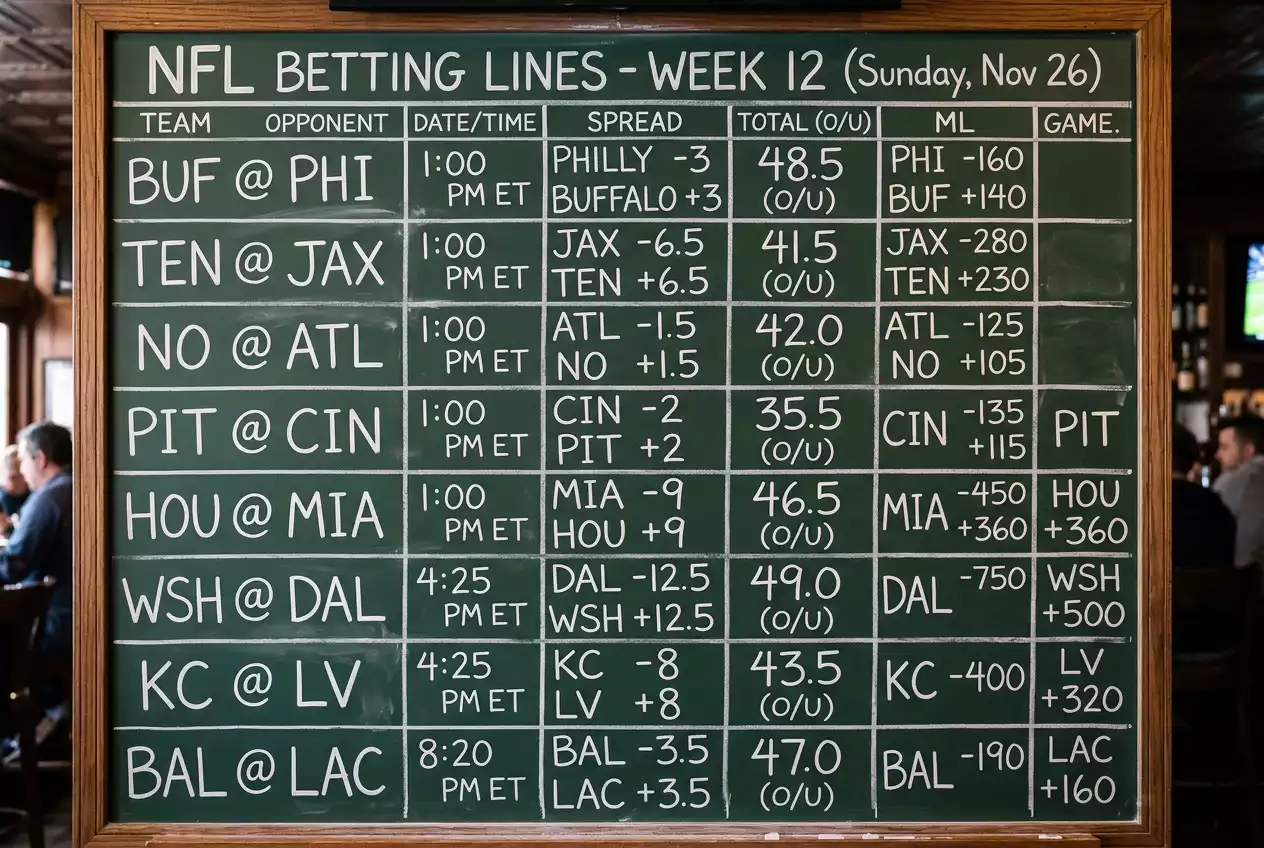
In American format, the moneyline is expressed as a positive or negative number. The favourite carries a negative number. Say, -200: that number tells you how much you need to stake to win 100. In this case, you risk 200 to profit 100. The underdog carries a positive number, say, +170, which tells you what you profit on a 100 stake. Risk 100, profit 170. The gap between these two numbers is the bookmaker’s margin.
In fractional format, the same prices might appear as 1/2 (favourite) and 17/10 (underdog). UK punters read these fluently: back the favourite at 1/2 and you risk 2 to win 1. Back the underdog at 17/10 and you risk 10 to win 17. The moneyline simply tells you the price of believing each team will win.
The critical thing to understand is that moneyline prices are not predictions. They are prices set to balance the book. If everybody wants to back Kansas City, the sportsbook shortens their price and lengthens the opponent’s price until the action evens out. This means moneylines on heavy favourites can become extremely expensive. I have seen NFL moneylines as short as -700 (1/7 fractional) for a dominant team playing a struggling opponent. At that price, you are risking seven units to win one, and a single upset wipes out seven winning bets.
This asymmetry is what makes moneyline betting deceptively dangerous for the uninitiated. A punter who backs three -300 favourites and wins all three has risked 900 to profit 300. If the fourth bet loses, the net position is zero. Four wins and one loss at those prices leaves you barely profitable. Compare that to a spread bettor at 10/11 across the same games: the risk and reward are balanced, and a 60% win rate generates steady, compounding profit. The moneyline rewards selectivity and punishes volume betting on short-priced favourites.
There is also a timing element unique to moneylines. Because the moneyline is derived from the same underlying assessment as the spread, it moves when the spread moves, but not always proportionally. A spread shift from -3 to -3.5 might move the moneyline from -170 to -190, or it might barely budge. The moneyline response depends on where the key numbers sit and how the sportsbook chooses to allocate the adjustment between the spread and the price. Monitoring both markets together gives you a more complete picture of how the sportsbook views a particular game.
Favourites, Underdogs and the Juice
The juice on moneylines works differently than on spreads, and this is where UK punters need to pay attention. On a point spread, both sides usually sit at 10/11 (or -110), so the bookmaker’s margin is tight and evenly distributed. On a moneyline, the margin is baked into the gap between the two prices, and it tends to widen as the mismatch between teams grows.
Take an evenly matched game. The moneyline might be -110 / -110 (10/11 on both sides), which is functionally identical to a pick’em spread at -110. The bookmaker takes roughly 4.5% in combined margin. Now take a lopsided game: -300 / +240. Convert those to implied probabilities. The favourite is priced at 75%, the underdog at 29.4%. Those probabilities sum to 104.4%, and that 4.4% excess is the bookmaker’s edge. In heavily lopsided matchups, the combined implied probability can exceed 110%, meaning the juice is taking a massive bite.
This matters because the juice on moneyline favourites is where sportsbooks make much of their NFL profit. Casual bettors love favourites. The emotional reward of being right is more compelling than the mathematical cost of being right at a bad price. If you are going to bet moneylines on NFL favourites, you need to be highly selective about which games and which prices. A -150 favourite is a different proposition entirely from a -350 favourite, even if you believe both teams will win.
Moneyline vs Point Spread: When to Use Which
A question I get asked at least once a week during the season: “Should I bet the moneyline or the spread?” The answer depends on the specific game, but I can give you the framework I use to decide.
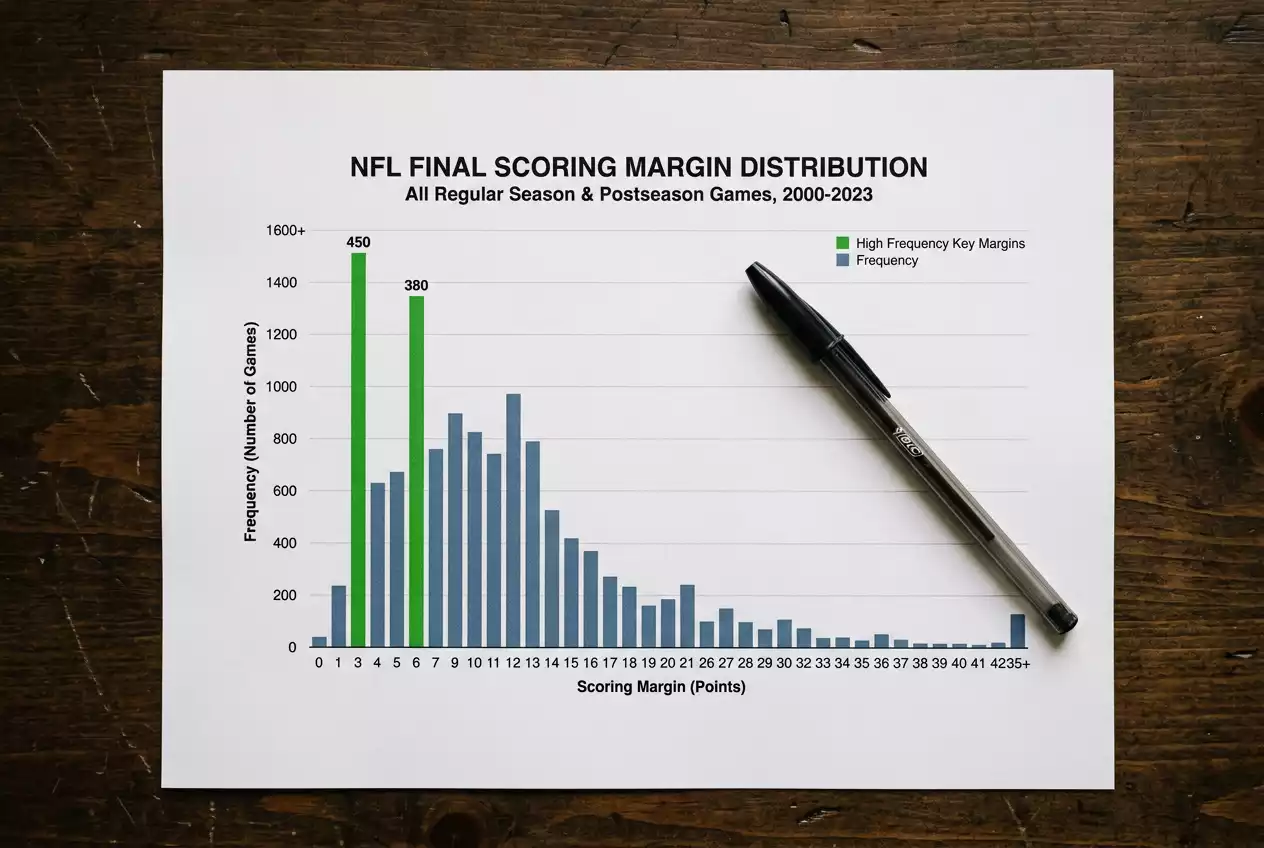
For small favourites – teams favoured by 1 to 3 points – the moneyline often makes more sense than the spread. Here is why: if a team is -2.5 on the spread at 10/11, the moneyline on the same team might be around -140 (5/7 fractional). You are paying a bit more juice, but you are removing the possibility that a last-second field goal turns a cover into a loss. In a close game, every extra path to a winning bet has value, and the moneyline eliminates the margin-of-victory variable entirely.
For large favourites, teams favoured by 7 or more points, the spread is almost always the better play. A -7 spread at 10/11 gives you far better value than a -350 moneyline (2/7 fractional) on the same team. The maths is clear: at -350, you need that team to win 77.8% of the time to break even. Even elite NFL teams do not win at that rate across a full season. The 2025 season saw Americans bet a record $30 billion on NFL games through legal sportsbooks, per the American Gaming Association – and a meaningful portion of that was recreational money flowing to heavy moneyline favourites, which is precisely why the juice on those bets is so high.
For underdogs, the moneyline is where I find the most interesting opportunities. If I believe a team has a 35% chance of winning but the moneyline implies only a 25% chance, that is a significant edge – and I do not need to worry about whether they win by 1 or by 14. The margin does not matter. A +300 underdog needs to win just 25% of the time to be profitable, and in the NFL, where parity is higher than any other major American sport, underdogs win outright more often than most UK punters expect.
Moneyline Parlays and Accumulators
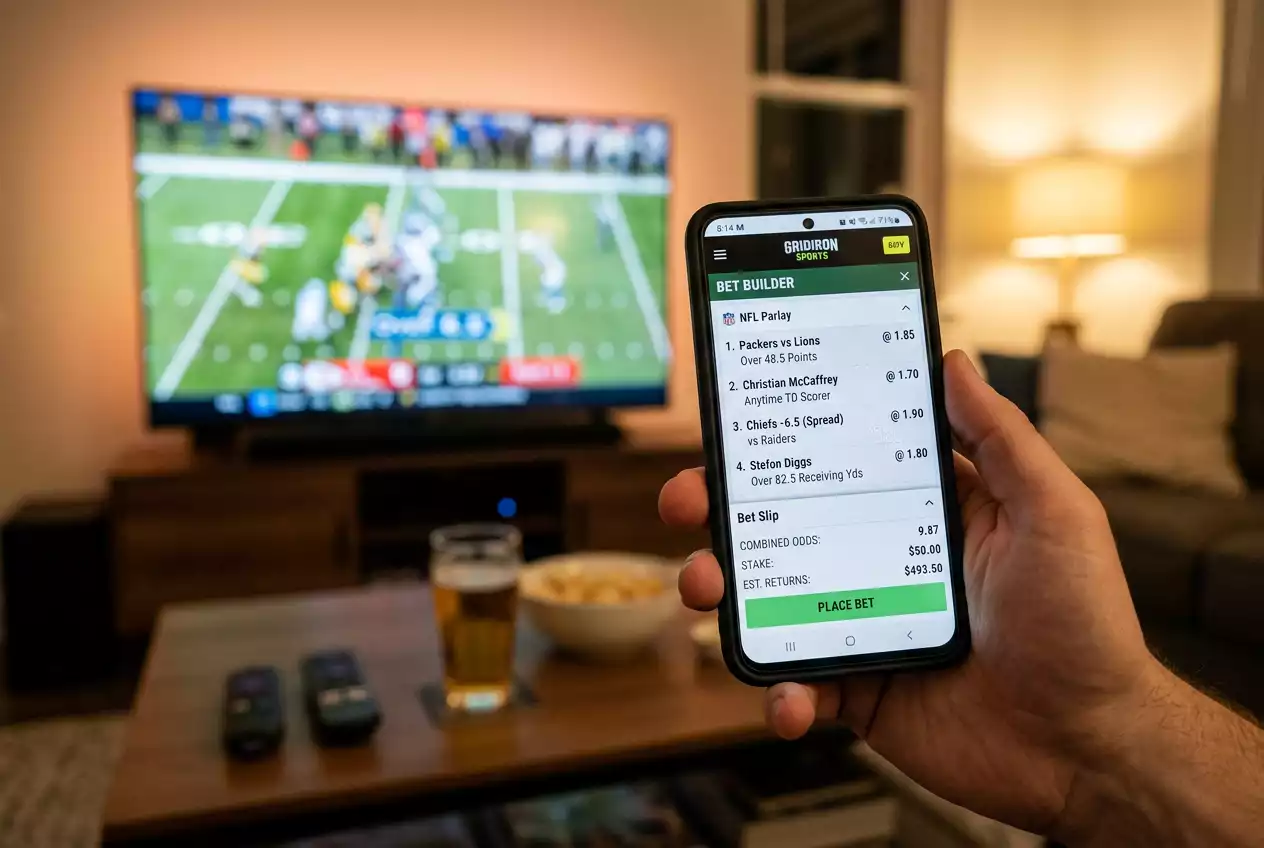
There is a reason sportsbooks promote parlays so aggressively, and it is not because they want you to get rich. Moneyline parlays – called accumulators in UK betting language, combine multiple moneyline selections into a single bet where all legs must win. The potential payout multiplies, the actual probability of hitting plummets, and the bookmaker’s margin compounds with every leg you add.
I will be blunt: I rarely bet moneyline parlays, and I think most punters should avoid them as a primary strategy. The maths works against you exponentially. A three-leg parlay of -200 favourites looks safe. You are combining three teams that each have roughly a 67% implied chance of winning. But the actual probability of all three winning is 0.67 x 0.67 x 0.67 = 30%. Factor in the juice, and you need to win more than 30% of the time to profit. The payout on a three-leg parlay at those prices is roughly 3/1, which implies a 25% break-even rate. So you have a slight mathematical edge. In theory. In practice, the variance is brutal. You will hit long losing streaks that test every ounce of discipline you have.
Where parlays become genuinely interesting is in small doses with correlated logic. If I believe weather conditions will suppress scoring in a particular game, I might parlay the under on the total with the moneyline on the team whose run game is better suited to ugly, low-scoring football. Those legs are correlated – the same factor improves both. Most sportsbooks do not adjust parlay pricing for correlation, which means you are getting a better deal than the independent-probability maths suggest.
The key distinction is between parlays as entertainment and parlays as strategy. A 6-leg accumulator of Sunday favourites is entertainment – you are paying for the thrill of a large potential payout at bad expected value. A 2-leg correlated parlay built on a specific thesis about a specific game is strategy. I have no objection to the former, as long as you understand what you are buying. I just do not confuse it with a betting edge.
The short version: parlays are not inherently bad. They are inherently expensive, and that expense only makes sense when you have a structural reason to combine legs rather than a gut feeling. If the legs of your accumulator share a common thesis – the same weather condition, the same game-flow prediction – the correlation can work in your favour. If you are just stacking favourites because the combined payout looks appealing, you are paying for excitement, not edge.
For the most accurate data and insights, always consult our top NFL betting guide before placing your wagers.
Finding Upset Value on NFL Moneylines
Super Bowl LX delivered a reminder that no NFL result is certain. Jeff Benson, director of sportsbook operations at Circa Sports, described the late action on the game with open astonishment. A million-dollar wager on a significant underdog landed shortly before kickoff, forcing the book to recalculate its entire liability position on the biggest betting event of the year. The total handle on that Super Bowl reached a record $1.76 billion through legal US sportsbooks, per industry reporting. When that much money is in play, the upsets hit hard – and the punters who backed the right underdog at the right price walked away with life-changing returns.
Finding upset value on NFL moneylines is not about picking underdogs at random. It is about identifying games where the market’s implied probability is lower than your own assessment. This sounds abstract, so here is my process. I start with the closing spread. If the spread is -3, the implied win probability for the favourite is roughly 60% and the underdog sits at roughly 40%. Then I look at the moneyline for the underdog. If the moneyline implies a 30% win probability but I believe the true probability is closer to 40%, that gap is value.
Several game-level factors correlate with underdogs winning outright more often than the market expects. Divisional games, where teams know each other intimately, produce more upsets than non-divisional matchups. Short-week games, particularly Thursday Night Football, compress preparation time, which disproportionately hurts favourites who rely on complex game plans. Games where the favourite has a backup quarterback starting or a key defensive player out are often underadjusted by the market, because the line move accounts for the absence but not fully enough.
I also pay close attention to how the moneyline translates across odds formats. A +250 underdog in American format is 5/2 in fractional or 3.50 in decimal. If I see the same team listed at 5/2 on one sportsbook and 11/4 on another, the second price is meaningfully better. That is 3.75 decimal versus 3.50, which over 100 bets at the same stake is a significant profit difference. Comparing moneyline prices across multiple UK-licensed books is the lowest-effort, highest-reward habit I can recommend.
One more thing about upsets: they happen at a rate that surprises people who follow the NFL casually. In any given regular-season week, two to four outright upsets are normal. Over an 18-week season, that is 40 to 70 underdog wins. The question is never whether upsets will happen. It is whether the price you are getting on a specific underdog compensates you fairly for the risk.
Moneyline Odds for UK Punters: Format and Platforms
The UK gambling market is enormous. The UK Gambling Commission reported gross gambling yield of 7.8 billion pounds for the remote sector in the 2024-25 period, a 13.1% increase year on year. Within that market, NFL betting is a growing niche driven by a fanbase that now numbers 14.3 million across the country. The infrastructure for NFL moneyline betting is well-established: every major UKGC-licensed sportsbook offers NFL moneylines, and most offer them in all three odds formats.
The practical question for UK punters is not whether you can bet NFL moneylines (you can, easily), but how to ensure you are getting the best price. Moneyline odds vary more across sportsbooks than spread odds do. On a spread bet at 10/11, there is not much room for variation. On a moneyline, I regularly see differences of 10-20% in implied probability between the best and worst price available for the same team. That variation is your opportunity.
Most UK sportsbooks default to fractional display for moneylines, which works well for moderate prices. When the moneyline gets extreme, say heavy favourites at 1/6 or big underdogs at 7/1, fractional format is intuitive. Where it becomes less intuitive is in the mid-range: 8/11, 4/6, 5/4, 6/5. These fractions require mental arithmetic that decimal format eliminates. I genuinely believe that switching to decimal display for NFL betting specifically is one of the easiest improvements a UK punter can make. It removes the friction between reading a price and understanding what it means.
One platform consideration that matters for NFL moneylines: market availability timing. UK sportsbooks often post NFL moneylines later than US-facing books, and they sometimes pull them or limit stakes during off-peak hours. If you are looking to bet moneylines on a Thursday or Monday Night Football game, check that your preferred sportsbook has the market open before you settle on your selection. The worst outcome is doing the analysis, deciding on a bet, and discovering the market is suspended when you try to place it at 11 pm on a weeknight.
There is also the question of market depth. Not every UK sportsbook offers the same range of NFL moneyline markets. Some limit you to the main game moneyline and a handful of props. Others offer first-half moneylines, quarter moneylines, and alternative moneylines at different prices. If moneyline betting is going to be a core part of your NFL strategy, you want a sportsbook that offers granularity. Not just the headline price.
Finally, remember that the moneyline and the spread are two expressions of the same underlying probability. If you can read one, you can derive the other. A -3 spread implies roughly a 60/40 split, which translates to a moneyline of about -150 / +130. When those numbers are misaligned, with the spread implying 60% but the moneyline pricing the favourite at 65%, one of those markets is offering better value than the other. Identifying that discrepancy is a quiet edge that most casual bettors never notice.
What does a negative moneyline number mean in NFL betting?
A negative moneyline indicates the favourite. The number tells you how much you need to stake to win 100 units. For example, -200 means you risk 200 to profit 100. In UK fractional odds, -200 is equivalent to 1/2. The larger the negative number, the heavier the favourite and the less profit you earn relative to your stake.
Is moneyline or spread betting better for NFL underdogs?
The moneyline is often the better vehicle for NFL underdogs because you only need the team to win outright – the margin does not matter. If you believe a team has a genuine chance of winning but are less confident they can keep the game within a specific point margin, the moneyline removes that variable. Spread betting on underdogs gives you an additional cushion if they lose, but at a price that reflects the lower risk.
How are moneyline odds displayed in UK fractional format?
UK sportsbooks display NFL moneylines as standard fractional odds. A -150 favourite becomes 2/3, a +200 underdog becomes 2/1, and an evenly matched game sits at roughly 10/11 on both sides. Most UK platforms let you toggle between fractional, decimal and American formats in your account settings, so you can switch to whichever format you find most readable.
Written by the editors at nfl Betting Ofds.