NFL Live Betting Odds: Real-Time In-Play Markets
 Available in US
The bet that taught me the most about live NFL betting was one I did not place. It was a 2023 playoff game, a team down 17 points in the third quarter. Their live moneyline had drifted past +600. I had the analysis, I had the bankroll, and I had a strong conviction that the game script favoured a comeback. The trailing team had an elite passing attack, the leading team’s defence was exhausted, and the clock situation still allowed for it. I hesitated. Thirty seconds later, a pick-six changed the game. The moneyline cratered to +250 before I could blink. By the time I placed my bet, the value had evaporated. The team won. My bet was profitable. But the lesson was not about the outcome. It was about the speed at which NFL live markets move, and why hesitation costs money in a way that pre-match betting never does.
Mobile betting accounted for 84% of all legal wagers in the US during the 2025 NFL season, per the American Gaming Association, and a substantial share of that was placed during games. Live betting is the fastest-growing segment of NFL wagering, and for UK punters watching games from their sofa at 11 pm, it represents both the most exciting and the most dangerous way to engage with American football markets.
To capitalize on rapidly changing in-play odds, utilizing a reliable NFL mobile betting app is absolutely essential.
NFL In-Play Odds Generation and Real-Time Market Shifts
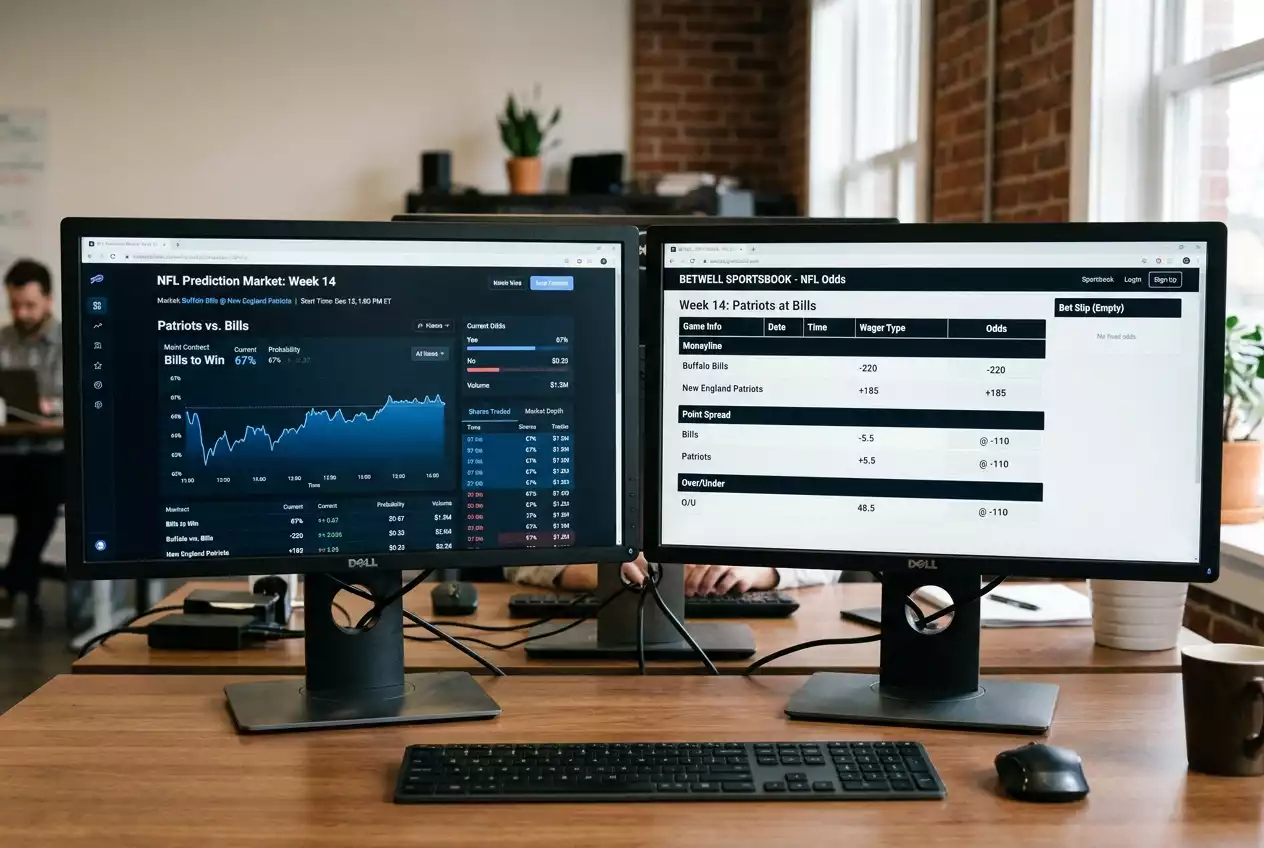
Pre-match odds are the product of days of analysis, market-making, and money flow. Live odds are the product of seconds. The fundamental mechanism is the same: the sportsbook sets a price that reflects the current probability of each outcome, but the inputs are dramatically different. In-play pricing models take the pre-match assessment, update it for the current score, time remaining, field position, timeouts remaining, and down-and-distance, and recalculate continuously. Every snap produces new data. Every data point shifts the model.
The most important variable in live NFL odds is not the score. It is the expected points model. Expected points assign a value to every game state based on historical outcomes from similar situations. If a team has first-and-goal from the 2-yard line, the expected points model says they are overwhelmingly likely to score, so the live line already reflects that touchdown before it happens. When the touchdown is actually scored, the line barely moves. But if that team fumbles on the 2-yard line, the deviation from expectation is massive, and the odds swing sharply in the other direction.
This is why live NFL betting feels unintuitive to newcomers. A team can score a touchdown and the live spread barely moves, because the score was already expected. Another team can punt from midfield and the spread shifts a full point, because the punt from that field position was a negative-value outcome that the model did not anticipate. Understanding expected points, even at a basic level – transforms your ability to read live markets. If you want to go deeper, I have written about EPA and other advanced metrics used in NFL betting.
Sportsbooks also manage live betting risk through delays and suspensions. Most UK-licensed operators impose a 5-to-10-second delay on live bet acceptance, giving their models time to recalculate after each play. During high-impact moments (turnovers, scoring plays, injuries) the market is suspended entirely, often for 30 seconds or more. These interruptions protect the sportsbook from being picked off by bettors who react faster than the model updates. They also mean that the price you see is not always the price you get, which adds a layer of execution risk that does not exist in pre-match wagering.
Another factor UK punters should be aware of: live odds are not set with the same margin structure as pre-match odds. The bookmaker’s edge on live markets is typically wider. Instead of a combined implied probability of 106% on both sides of a spread, live markets might run at 108% or 110%. The sportsbook justifies this higher margin because of the speed at which they must price, the risk of information asymmetry (a bettor watching a different broadcast might see a play before the model updates), and the operational cost of running a real-time pricing engine. You are paying a premium for the ability to bet during the game, and that premium is baked into every price.
The practical consequence: live betting demands a higher edge threshold than pre-match to be profitable. If you need 52.4% accuracy to break even on pre-match spreads at 10/11, you might need 53-54% accuracy on live spreads at wider margins. That difference sounds small, but over hundreds of bets, it is the line between profit and loss. I only bet live when I believe I have a clear, articulable edge, usually based on something I see in the game that the model has not yet incorporated.
NFL-Specific Live Markets: Drive Betting, Quarter Props and Timeouts
Every sport has live betting. What makes the NFL distinctive is the granularity of its in-play markets. The stop-start nature of American football – discrete plays separated by huddles, with clear situational data on every snap, makes it uniquely suited to micro-betting. And the sportsbooks have built out the market infrastructure to take advantage of that structure.
Drive betting is the most NFL-specific live market, asking you to bet on the outcome of a single offensive drive: touchdown, field goal, punt, or turnover. Drive outcomes depend heavily on starting field position, the team’s red-zone efficiency, and how many timeouts they have available. A drive starting at the opponent’s 35-yard line has a fundamentally different probability distribution than one starting from the team’s own 10. I use drive betting selectively – typically when a team has excellent starting field position but the live drive market has not fully adjusted for the short-field advantage.
Quarter props let you bet on the score or outcome of individual quarters. First-quarter betting is particularly interesting because it isolates the scripted plays, the opening sequences that coaching staffs prepare specifically for each game. Some teams are notoriously slow starters, struggling in the first quarter but dominating from the second quarter onward. Others come out aggressively with their scripted plays and then cool off as the opponent adjusts. These patterns are reasonably consistent within a season and can be exploited through quarter-specific live markets.
The NFL generates more handle per game than any other major league at DraftKings, despite having the fewest fixtures of any major American sport, according to ESPN. Part of the reason is the density of these micro-markets. A single NFL game can produce 150 to 200 in-play betting opportunities across drives, quarters, and snap-by-snap props. For the punter who treats live betting as a structured activity rather than an impulse, the volume of opportunity is staggering.
Timeout betting is a niche within the niche. Some sportsbooks offer odds on when a team will use its first timeout, or whether both teams will use all their timeouts by a certain point in the game. These markets are extremely thin, with low limits and wide margins, but they appeal to bettors who track coaching tendencies. Certain head coaches burn timeouts early and consistently. Others hoard them. If you know the coaching tendencies, you can occasionally find value, though the small bet limits mean this is more of a hobby than a strategy.
Momentum Shifts and How Odds React
Jeff Benson of Circa Sports captured the energy of live NFL betting perfectly during Super Bowl LX when a late million-dollar wager landed on a significant underdog and the book scrambled to adjust its liability. That is an extreme example, but it illustrates the core dynamic: live odds react to events that shift perceived probability, and the biggest shifts happen when something unexpected occurs.
A momentum shift in the NFL is not just a feeling – it is a measurable change in win probability. A pick-six can swing win probability by 20 or more percentage points in a single play. That translates to a live spread movement of 5 to 8 points. If you are on the wrong side of a momentum shift, the loss is brutal. If you are positioned to capitalise on one, the returns can be exceptional.
The punter’s challenge is distinguishing genuine momentum shifts from noise. Not every big play changes the game’s trajectory. A 60-yard reception that moves a team from their own 20 to the opponent’s 20 looks dramatic, but it advances expected points by roughly 3 – significant, not transformative. A fumble recovery at midfield looks less dramatic but can swing expected points by 5 or more, because it simultaneously eliminates the opponent’s expected scoring opportunity and creates a short-field drive for the recovering team.
I have a personal rule for live betting around momentum: I never bet in the 30 seconds immediately after a high-impact play. The emotional spike, whether excitement or panic, is strongest in that window, and the sportsbook’s live market is either suspended or in the process of repricing. By the time the market reopens, I have had a moment to assess whether the play genuinely changes my view of the game or just changes the score. Many scoring plays are expected events that the pre-play win probability already accounted for. The market knows this. The reactive bettor does not.
There are specific game situations where momentum shifts create genuine live betting opportunities rather than traps. The most reliable is a late first-half turnover that leads to a short-field scoring drive and then a second-half opening-drive score – the classic “two-score swing.” When a team enters halftime having scored the last two touchdowns, the live spread for the second half often overcorrects in their favour. The public sees momentum. The model sees regression. If the trailing team has the superior underlying talent, the halftime live line can offer real value on the team that just took two punches.
Another pattern I watch for is the “garbage time correction.” A team trailing by 21 points in the fourth quarter often sees their live spread balloon to +20 or more as the market prices in the blowout. But garbage-time scoring is extremely common in the NFL – backup units concede easy points, clock-killing drives stall at midfield, and the trailing team’s desperation passing attack occasionally connects for a long touchdown. The final margin is almost always closer than the fourth-quarter score suggests. If you can identify genuine garbage-time situations and the live spread has overexpanded, the trailing team at a huge live number is one of the more consistent edges I have found.
Stay ahead of the bookmakers with real-time updates from nfl Betting Ofds throughout the entire season.
Late-Night Betting: UK Time Zones and Live NFL
This is where being a UK-based NFL bettor gets genuinely inconvenient. The early Sunday window kicks off at 6 pm UK time. The late window starts at 9:25 pm. Sunday Night Football begins at 1:20 am Monday morning. Monday Night Football is another 1:20 am start. Thursday Night Football kicks off at 1:15 am on Friday.
If you are live betting the Sunday night or Monday night game, you are making decisions with real money well past midnight. I do not need to cite a study to tell you that cognitive performance declines with fatigue – every punter who has ever chased a loss at 2 am knows this from experience. The question is what to do about it.
The NFL has 14.3 million fans in the UK, per official league research, and over 6 million viewers tuned into the 2025 London Games across TV and online platforms, according to London Loves Business. The appetite for late-night NFL content is clearly there. But watching a game for entertainment and placing live bets during that game are fundamentally different activities, and the late-night time slots create a risk environment that does not exist for Premier League or Championship betting.
My approach: I set a hard cut-off. No live bets after midnight, regardless of the game situation. All pre-match bets for Sunday night and Monday night games are placed before 6 pm, when my judgement is sharpest. If I am going to live bet, I do it during the early and late Sunday windows, when I am alert and can process information clearly. The 1 am games are for watching, not for wagering.
There is also a structural issue with late-night live betting that goes beyond personal discipline. UK sportsbook customer support teams often operate with reduced staffing after midnight. If you have a disputed settlement on a live bet placed at 1:30 am, you may not get a response until the following business day. For a live bet where timing and pricing are contentious, that delay can be the difference between a resolved dispute and a written-off loss. Knowing when your sportsbook’s support is fully staffed – and confining your live betting to those hours, is a risk management decision that most punters never think about.
This is a discipline issue, not a strategy issue. The live odds at 1 am are not systematically worse than the live odds at 7 pm. But my ability to evaluate them is worse, and that makes the expected value of any bet I place at 1 am worse by extension. The sportsbook does not get tired. The algorithm does not have a fifth beer. If you are going to bet against a machine, do it when you are at your sharpest.
Staying Disciplined During Live Betting
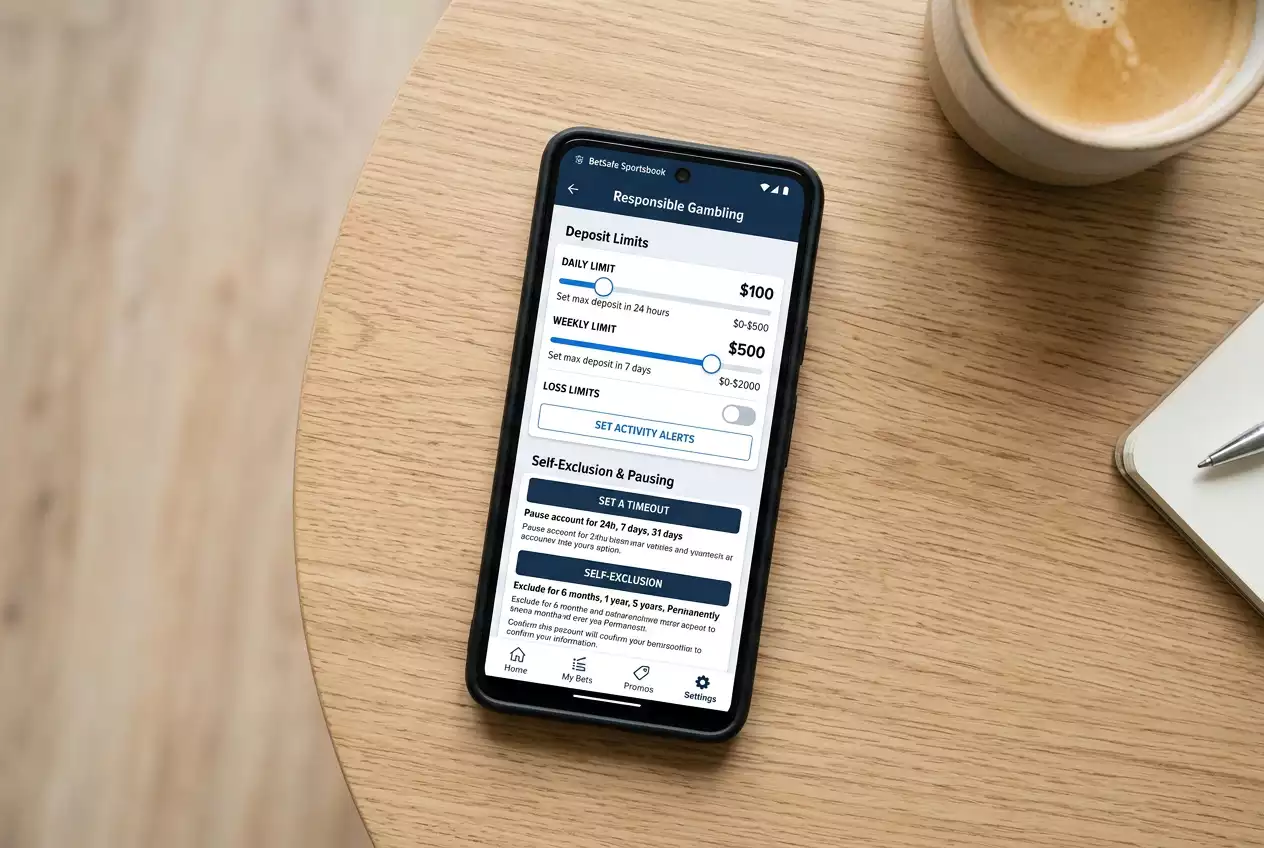
Ten percent of UK adults placed a sports bet online or through an app in a recent four-week period, according to the Gambling Survey for Great Britain. For many of those bettors, the NFL season introduces a new rhythm: Sunday evenings built around a slate of games, each one generating a stream of live betting prompts and push notifications from the sportsbook app on their phone.
Live betting amplifies every behavioural bias that pre-match betting merely whispers. The recency bias, overweighting the last thing you saw, is strongest during a live game because the last thing you saw was a 50-yard touchdown or a crucial fumble. The sunk cost fallacy – “I’ve already lost my pre-match bet so I need to recover in-play” – is loudest when you are watching the game and can see opportunities to bet your way back. The availability bias – “this team always comes back in the fourth quarter” – is most seductive when you are emotionally invested in the outcome.
I manage live betting discipline through three rules. First, I set a session bankroll before the game starts. A fixed amount I am willing to risk on live bets for that specific game, separate from my pre-match wagers. When that allocation is gone, I stop. Second, I only bet markets I researched before the game. If I did not plan to bet drive outcomes, I do not start betting drive outcomes because I just watched an exciting one. Third, I never increase my stake size during a live session. The temptation to double down after a loss is strongest during live betting, and the antidote is a mechanical rule that removes the decision from my hands.
A fourth rule I added recently: I log every live bet with a one-sentence justification at the time of placement. Not afterwards, not the next morning – at the exact moment I confirm the wager. This forces me to articulate why I believe the bet has value, and it creates an honest record that I review at the end of each month. The bets I regret most are always the ones where my real-time justification was thin – “felt like the right move” rather than “the live spread has overcorrected for a first-quarter deficit in a game where the trailing team has a significant passing advantage.” If you cannot write a single clear sentence about why you are betting, you should not be betting.
The 48% gambling participation rate across UK adults, reported by the Gambling Survey for Great Britain, includes a spectrum from casual lottery players to daily bettors. Where you sit on that spectrum during NFL season depends less on how much you know about the sport and more on how well you manage the psychological pressures of live wagering. The analytics are secondary. The discipline is primary. Every long-term profitable NFL bettor I know – including myself on my better days – treats live betting as a controlled, pre-planned activity, never an improvised one.
What NFL live betting markets are available to UK punters?
UK-licensed sportsbooks typically offer live spreads, moneylines, totals, quarter and half betting, drive outcome markets, next scoring play, and selected player props during NFL games. Market availability varies by operator and by the profile of the game – prime-time matchups tend to have deeper live markets than early-window games between lower-profile teams.
How quickly do in-play NFL odds change?
NFL live odds can change on every play. Scoring plays, turnovers and significant yardage gains trigger the largest adjustments; spreads can shift 2 to 5 points in a single moment. Markets are typically suspended for 10 to 30 seconds after high-impact plays while pricing models recalculate. Between plays, incremental shifts of 0.5 to 1 point occur as field position, down-and-distance and time remaining update.
Is live betting on the NFL riskier than pre-match?
Live betting carries additional risks beyond pre-match wagering. Decision-making speed, emotional reactions to game events, late-night fatigue for UK punters and sportsbook execution delays all introduce variables that do not exist when you place a pre-match bet at your leisure. The odds themselves are not inherently worse, but the environment in which you evaluate them is more pressured, which tends to produce lower-quality decisions for undisciplined bettors.
Created by the ”nfl Betting Ofds” editorial team.