Top UK NFL Betting Sites: Sportsbooks, Markets and Bonuses
 Available in US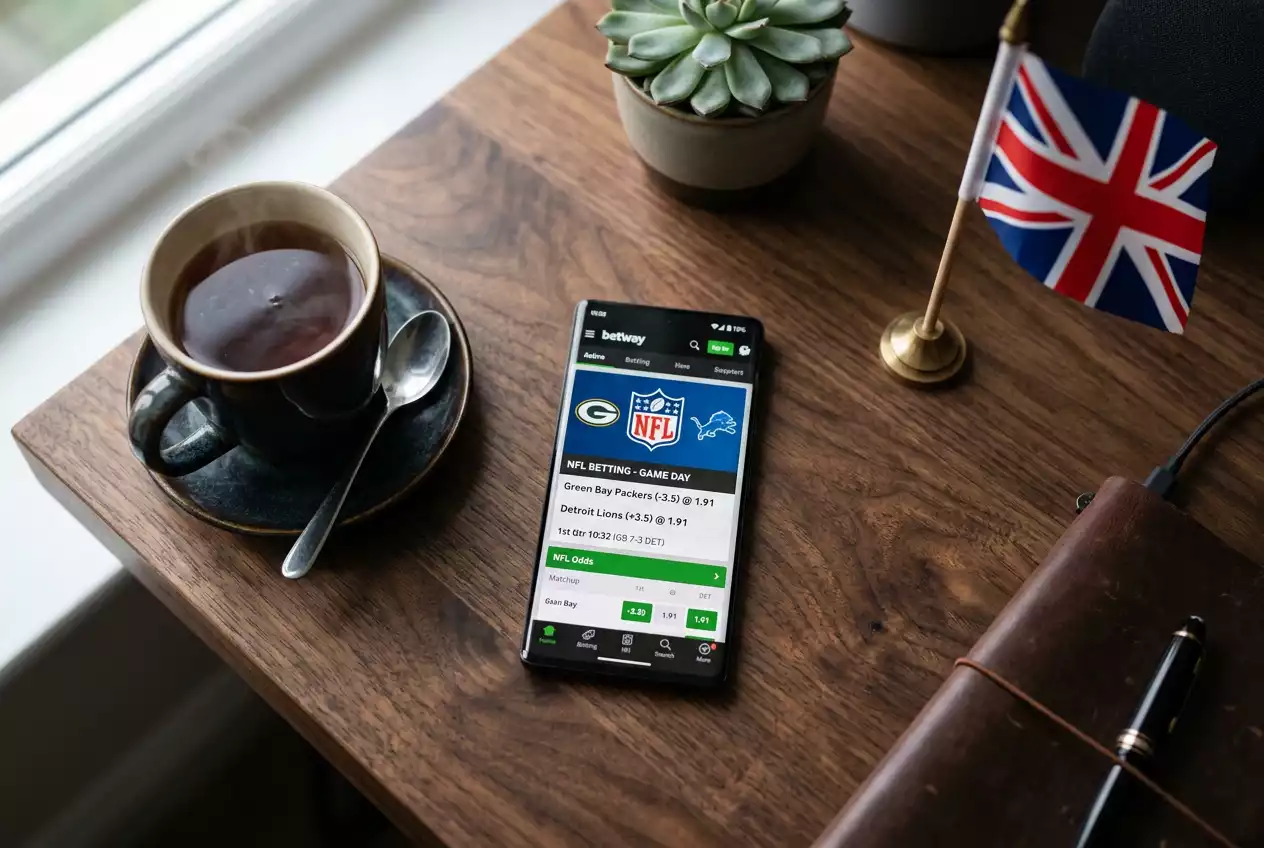
I have accounts with more UK-licensed sportsbooks than I am comfortable admitting. Some I use weekly during the NFL season. Others I opened, explored for thirty minutes, and never touched again. The difference between those two categories has nothing to do with welcome offers or promotional gimmicks. It comes down to a set of structural qualities that determine whether a platform is genuinely useful for NFL betting or just wearing the right jersey.
The UK online gambling market reported 13.5 million active accounts per month in the last quarter of 2024-25, according to UK Gambling Commission data. That is a lot of people choosing where to place their money, and the operators competing for that attention offer wildly different experiences when it comes to American football. Some treat the NFL as a core product with deep market coverage and competitive odds. Others bolt on a thin NFL section as an afterthought, offering the bare minimum to tick a box.
This is not a list of recommended sportsbooks. I do not rank operators and I do not collect affiliate commissions. What I can do is walk you through the criteria that separate a genuinely good NFL sportsbook from a poor one, so you can evaluate any platform against a consistent standard.
UKGC Licensed NFL Betting Platforms: Security and Regulations
Every conversation about choosing a sportsbook in the UK starts and ends in the same place: is it licensed by the UK Gambling Commission? This is not a suggestion. It is the legal requirement for any operator accepting bets from UK residents, and it is the single most important factor in protecting your money and your data.
A UKGC licence means the operator has passed fit-and-proper-person tests, maintains segregated customer funds, submits to regular compliance audits, and operates under a regulatory framework that has real enforcement teeth. Since April 2025, that framework has tightened considerably. The UK government introduced a mandatory gambling levy requiring operators to contribute 100 million pounds annually toward tackling gambling harm – funding that goes to research, prevention, and treatment programmes overseen by statutory bodies. Online stake limits have been implemented for slots at 5 pounds per spin for those aged 25 and over, and 2 pounds per spin for 18-to-24-year-olds.
These reforms do not apply directly to sports betting stakes in the same way, but they signal the regulatory direction. The UKGC is actively tightening oversight of all remote gambling products, and operators that cut corners on compliance face real consequences – licence suspension, fines, and in extreme cases, revocation. When a UK government minister stated in the House of Lords debate on the Gambling Levy Regulations 2025 that these stake limits were designed “to target those most at risk of harm while ensuring that the impact on operators is proportionate,” it was a clear message that the regulator intends to keep tightening the framework.
For you as a punter, this means sticking to UKGC-licensed operators is not just a legal formality – it is the practical guarantee that your deposits are protected, your withdrawals will be processed, and you have a complaints process that ends with an independent arbiter rather than a dead email address. If a sportsbook is not listed on the UKGC’s public register, do not give it your money. Full stop.
Market Depth: How Many NFL Markets Should You Expect
Here is a test I run every August when the NFL preseason kicks off: I open each of my sportsbook accounts and count the number of distinct betting markets available for a single regular-season game. The range is astonishing. Some operators offer 150 or more markets per NFL game – spreads, moneylines, totals, player props across multiple stat categories, team props, quarter betting, drive markets, and bet builder combinations. Others offer fewer than 20.
The NFL generates more betting handle than any other league at major US sportsbooks despite fewer games than the NBA or MLB, per ESPN. That volume exists because the market depth is extraordinary – every game is a universe of betting opportunities. If your UK sportsbook is only offering you spreads, moneylines, and a handful of totals, you are missing the majority of the action.
Market depth matters for two reasons beyond variety. First, deep markets create competition between the different lines within the same game, which helps you identify value. If the quarterback passing yardage over/under is 265.5 but the game total and spread imply the team will score 28 points, which historically correlates with 280-plus passing yards for an average quarterback. The yardage line might be underpriced. You cannot spot this discrepancy if the yardage market does not exist on your platform.
Second, deep markets attract more sophisticated bettors, which means the lines are sharper. This sounds counterintuitive – why would you want sharper lines? Because sharper lines are fairer lines. A sportsbook with soft, wide-margin NFL lines is making more money per bet from you. A sportsbook with sharp, tight-margin lines is making less. Over a season of regular betting, the margin difference between a sharp and a soft sportsbook can easily exceed the value of any promotional offer.
My minimum threshold for an NFL sportsbook: at least 80 markets per regular-season game, including player props for all major statistical categories. If a book does not meet that standard, I use it for comparison pricing only.
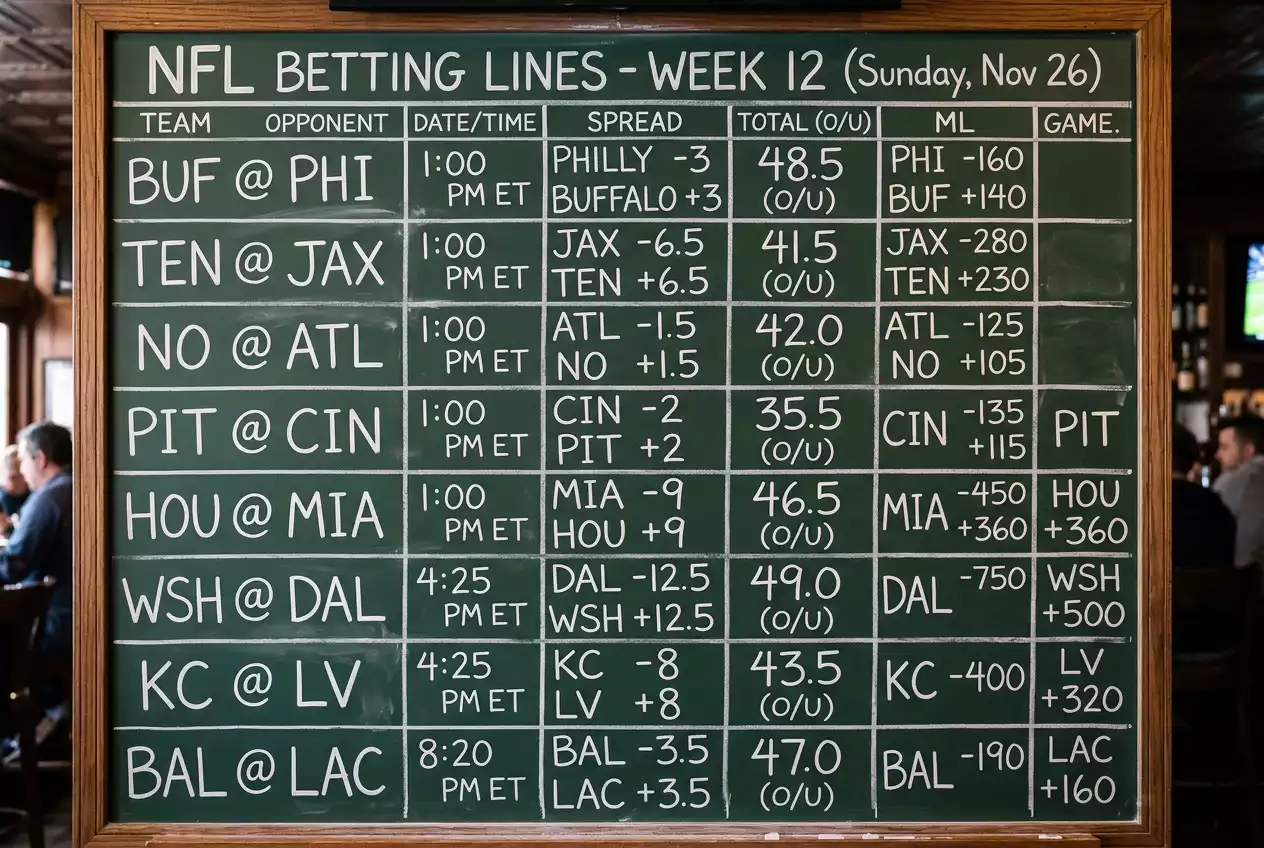
One more dimension of market depth that gets overlooked: alternative lines. A good NFL sportsbook will offer alternative spreads and alternative totals – say, the standard spread at -3.5 alongside options at -1.5, -6.5, -10.5, and so on, each at adjusted prices. Alternative lines let you express different levels of conviction about a game. If you believe a team will win comfortably but the standard -3.5 feels too thin, taking -6.5 at a longer price might better match your view. Conversely, if you just want the team to win and the moneyline is too short, an alternative spread of -0.5 at near-even odds gives you a cheaper entry than the moneyline itself.
I also check whether the sportsbook offers team-specific props beyond player props. Team total points, team total touchdowns, team total sacks – these markets let you isolate one side of the game without taking a position on the other team. They are particularly useful for games involving a strong offence against a strong defence, where the overall total masks the asymmetry between the two units. If your sportsbook does not offer team totals, you are missing a valuable market segment.
Odds Display and Format Flexibility
I spent a frustrating Sunday evening in 2022 trying to compare moneyline prices across three sportsbooks, one displaying fractional, one decimal, and one American. By the time I had converted everything to the same format in my head, the line had moved. That was the week I stopped tolerating sportsbooks that do not offer easy format switching.
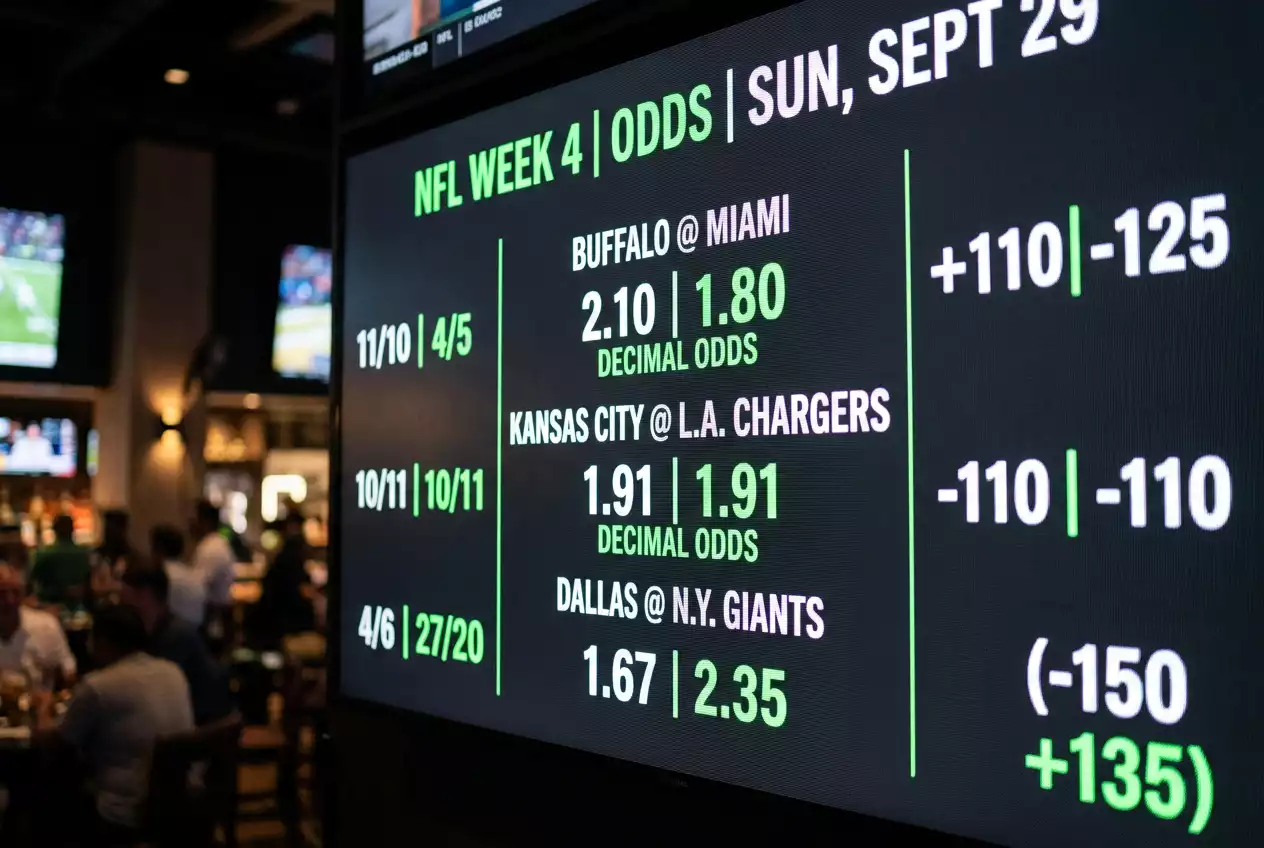
Any serious NFL sportsbook should let you toggle between fractional, decimal, and American odds with a single tap. This is not a premium feature – it is a basic quality-of-life expectation. Fractional is the UK default and works well for moderate prices. Decimal is the best format for cross-book comparison because every price is a single number. American is the native NFL format, and being able to read it fluently gives you access to the language used in every US-based analysis, podcast, and data source.
Beyond format switching, look at how odds are displayed in the bet slip. Does the sportsbook show you the implied probability alongside the price? Does it show the potential return clearly before you confirm? Does it update in real time when the line moves? These are not cosmetic details – they are the interface between you and your money, and a poorly designed bet slip leads to mistakes that a well-designed one prevents.
One more detail: how the sportsbook handles odds changes after you add a selection to your bet slip. Some operators freeze the price for a short window, giving you time to confirm. Others let the price move and require you to accept the change before placing the bet. During live NFL games, where lines shift rapidly, the difference between these two approaches can cost or save you significant value.
Also consider how the sportsbook handles odds on same-game multi-bets and bet builders. Some platforms display the combined odds clearly as a single fractional or decimal price. Others show each leg’s odds but leave you to calculate the combined return mentally. In a bet builder with four or five legs, mental calculation is error-prone and slow. A sportsbook that displays the combined return prominently – and updates it in real time as you add or remove legs – respects your time and reduces the chance of placing a bet you did not fully understand.
Mobile Experience and Overnight Betting
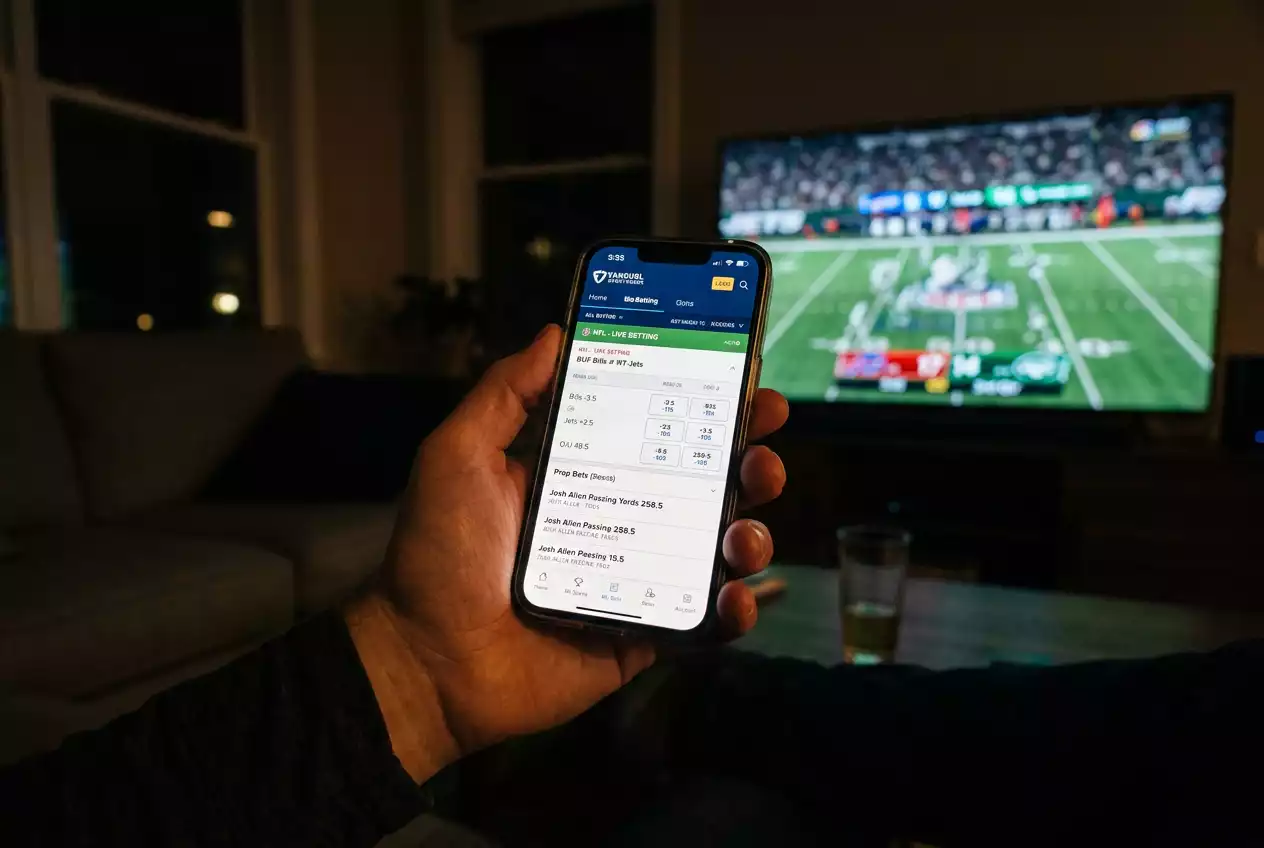
NFL games kick off between 6 pm and 1:20 am UK time on a typical Sunday. If you are betting the late-afternoon US window, you are on your phone at midnight or later. The mobile experience is not a nice-to-have for NFL bettors in Britain – it is the primary interface for the majority of your wagering.
Mobile accounted for 84% of all legal wagers in the US in the 2025 season, per the American Gaming Association, and the figure is likely comparable in the UK given similar smartphone penetration and betting habits. What I look for in a mobile NFL betting experience is speed, stability, and navigability under time pressure. Can I find the specific player prop I want in under 10 seconds? Does the app crash or lag during high-traffic moments like the opening kickoff of a prime-time game? Can I place a live bet during a timeout without the odds refreshing three times before my confirmation goes through?
These sound like minor complaints, but they compound over a season. If your app adds 30 seconds of friction to every bet, and you place 200 bets across a season, that is nearly two hours of wasted time – time during which lines can move against you. The best NFL sportsbook apps I have used feel like they were designed by someone who actually bets on American football at 11 pm on a Sunday. The worst feel like they were designed by someone who has never used the product outside office hours.
Battery drain is another practical consideration. A sportsbook app that runs heavy background processes will drain your phone by halftime of the late game. If you are following multiple games, tracking live odds, and occasionally placing bets, you need an app that is efficient with system resources. I have resorted to carrying a battery pack on NFL Sundays. Not because I am proud of it, but because the alternative is a dead phone in the fourth quarter.
Responsible Gambling Tools to Check
I include this section not as a regulatory checkbox but because responsible gambling tools are a direct indicator of operator quality. Sportsbooks that invest in sophisticated self-management features tend to invest in platform quality across the board. Sportsbooks that treat responsible gambling as a footnote tend to cut corners elsewhere too.
A House of Lords Gambling Industry Committee report found that 60% of UK bookmaker profits come from just 5% of customers – those who are problem gamblers or at risk of becoming one. That statistic should give every punter pause. The tools that protect you from sliding into that 5% are not optional extras – they are load-bearing features of any platform you trust with your money.
The baseline tools every UKGC-licensed sportsbook must offer are deposit limits, loss limits, session time limits, cooling-off periods, and self-exclusion. What distinguishes good implementations from bad ones is accessibility and friction. Can you set a deposit limit in under three taps from the home screen, or is it buried six menus deep in settings? Does the app show you a spending summary proactively, or only when you go looking for it? Can you activate a cooling-off period instantly, or does the sportsbook try to talk you out of it with a “are you sure?” prompt that adds unnecessary friction?
A UK government minister, speaking during the 2025 Gambling Levy Regulations debate, noted that the 100-million-pound annual levy ensures that “key commissioning decisions on research, prevention and treatment are made by statutory bodies.” That funding is a systemic backstop – but your first line of defence is the tools on your own sportsbook account. Use them proactively, not reactively.
GAMSTOP, the national self-exclusion scheme, blocks you from all UKGC-licensed gambling sites for a period of your choosing (six months, one year, or five years). If you ever feel that your NFL betting has moved from recreation to compulsion, GAMSTOP is the nuclear option – and it works precisely because it is difficult to reverse. You can read more about the broader responsible gambling framework for NFL bettors in the UK.
Beyond the formal tools, pay attention to how the sportsbook communicates with you. Does it send push notifications encouraging you to bet during live games? Does it promote bet builders with misleading “boosted odds” that obscure the actual margin? Does the deposit process make it easier to add funds than the withdrawal process makes it to take them out? These design choices reveal the operator’s priorities. A sportsbook that nudges you toward impulsive betting is not one I trust with my money, even if every regulatory box is technically ticked.
Red Flags That Signal a Poor NFL Sportsbook
After years of evaluating platforms, I can usually identify a poor NFL sportsbook within five minutes. The red flags are consistent enough to form a checklist, and none of them involve the sportsbook’s promotional offers – because the quality of an operator’s NFL product has nothing to do with how much free-bet money they throw at you.
The first red flag is limited NFL market availability outside the US season. A sportsbook that only offers NFL markets from September to February is treating American football as a seasonal novelty. Serious NFL sportsbooks keep futures markets open year-round, offer draft-related props in the spring, and post early lines for preseason games. Year-round availability signals genuine investment in the product.
The second red flag is wide margins on standard markets. If the combined implied probability on a standard NFL spread exceeds 108%, the sportsbook is charging you well above the industry norm. The UK gambling sector reported gross gambling yield of 7.8 billion pounds in the remote sector for 2024-25, per the UK Gambling Commission – operators are not struggling for revenue. Wide margins on NFL games indicate either laziness in line-setting or a deliberate strategy to extract maximum value from customers who do not compare prices.
The third red flag is slow or unreliable live betting. NFL in-play markets move fast. A turnover, a big play, a timeout can shift the spread by 2 or more points in seconds. If the sportsbook’s live betting interface lags, freezes, or rejects bets at a high rate, the platform cannot handle the demands of NFL wagering. Test the live betting experience during a preseason game before committing to a platform for the regular season.
The fourth red flag is poor cash-out implementation. Cash out allows you to close a bet before the game ends at a price that reflects the current state of play. If a sportsbook only offers cash out on pre-match moneylines but not on spreads, props, or live bets, their cash-out infrastructure is underdeveloped. Similarly, if the cash-out price consistently lags behind the live market by several seconds, you are paying for that delay every time you use the feature.
The fifth, and often the most revealing: customer support quality. Send a query about an NFL-specific issue – a void bet due to a player injury, a settlement dispute on a prop, a question about market rules for overtime. If the response comes back generic, scripted, or clearly written by someone unfamiliar with American football, the sportsbook does not have the internal expertise to service NFL bettors properly. Customer support is the stress test of any platform, and NFL betting generates enough unusual situations, ties, safeties, defensive touchdowns, overtime rules, that specialist knowledge matters.
Are all UK-licensed bookmakers safe for NFL betting?
All UKGC-licensed bookmakers meet minimum regulatory standards for fund protection, fair terms and responsible gambling tools. However, there are significant differences in NFL market depth, odds competitiveness, mobile performance and customer support quality. A safe sportsbook is not necessarily a good one for NFL betting specifically. You need to evaluate the platform’s American football product independently from its licensing status.
How many NFL betting markets should a good UK sportsbook offer?
A well-equipped NFL sportsbook should offer at least 80 distinct markets per regular-season game, including point spreads, moneylines, totals, player props across passing, rushing and receiving categories, team props, quarter and half betting, and bet builder functionality. Fewer than 20 markets per game indicates the operator treats the NFL as a secondary product and may not price its lines competitively.
What responsible gambling features should I look for?
Every UKGC-licensed sportsbook must offer deposit limits, loss limits, session time limits, cooling-off periods and self-exclusion through GAMSTOP. The quality of implementation matters as much as availability: look for tools that are accessible within a few taps from the home screen, proactive spending summaries, and instant activation of cooling-off periods without unnecessary friction or confirmation prompts.
Published by the nfl Betting Ofds team.