NFL International Games Betting: Global Expansion Odds Markets
 Available in US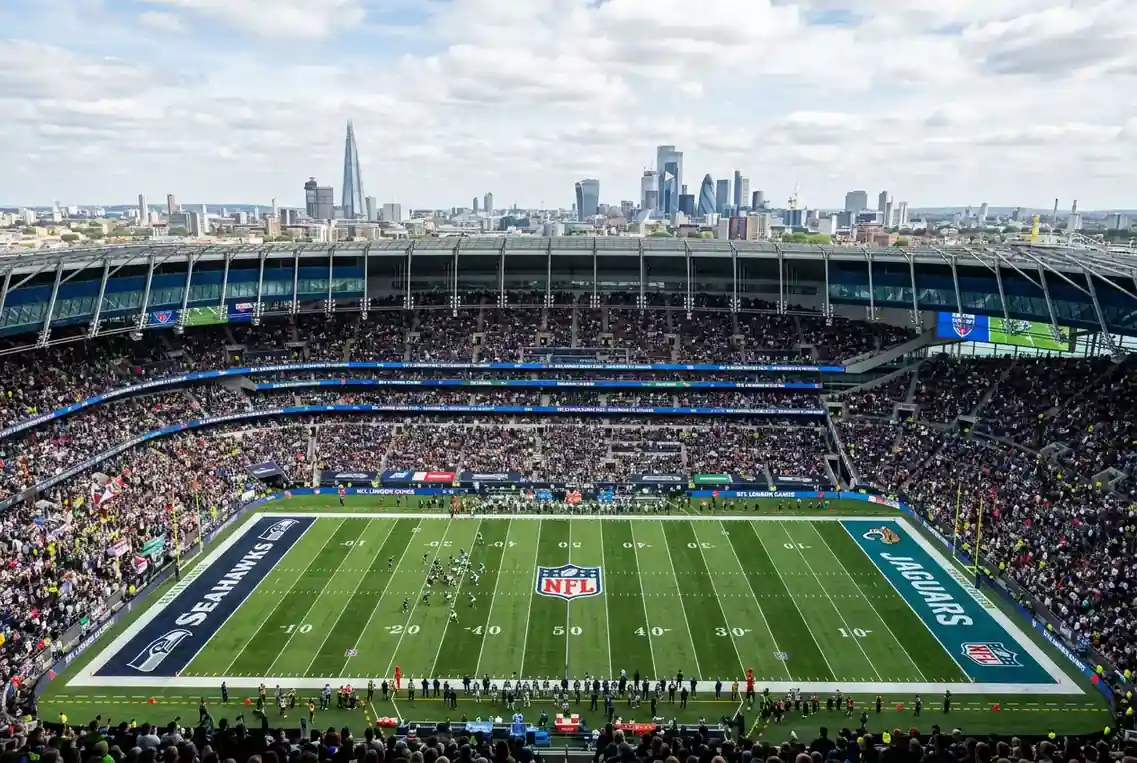
The NFL played seven international games during the 2025 season – a record – and commissioner Roger Goodell has made no secret of his ambition to push that number higher. His stated target is 16 regular-season games outside the United States every year, one for each pair of franchises on the schedule. For punters in the UK and across Europe, this is not a footnote buried in league news. It is a structural shift that will reshape how oddsmakers price dozens of games each autumn, and it opens betting angles that barely existed five years ago.
In 2025, the NFL staged seven international fixtures spanning London, Munich and São Paulo. Roger Goodell told CNBC that markets outside the US are “very, very attractive” and confirmed the league’s long-term roadmap: regular-season football on every inhabited continent. The 2026 international slate already includes three London dates – split between Tottenham Hotspur Stadium and Wembley – plus games in Munich, Mexico City, Melbourne and, for the first time, Paris. Understanding what this expansion means for the odds is no longer optional for anyone who takes NFL wagering seriously.
NFL 16-Game International Schedule and Betting Odds Volume
Goodell first floated the idea of a full round of international fixtures in 2024, and by 2025 it had solidified into concrete policy language. “I do believe we can get to 16 games, and I think maybe in 16 different markets,” he told reporters, emphasising that the league wants to put roots in host cities rather than treat them as one-off spectacles. The practical implication is enormous: if every team plays one game abroad each season, roughly 9% of the entire regular-season schedule would take place outside the US.
For sportsbooks, that means 16 games per year with non-standard venue dynamics. Home-field advantage – typically worth around 1.5 to 2.5 points in a spread – becomes an abstraction when neither team is playing on its own turf. Designated “home” sides still exist on paper, but the crowd composition at Wembley or the Allianz Arena bears little resemblance to, say, Arrowhead Stadium on a December Sunday. Bookmakers are still refining how they model these fixtures, and that period of calibration is precisely where value can appear for attentive punters.
The expansion roadmap also hints at games in Asia and Africa within the next decade. Goodell mentioned moving into Asia after Australia, describing the NFL as “serious about being a global sport.” Each new continent introduces fresh logistical variables – jet lag severity, altitude, climate – that will test existing pricing models even further.
Munich, Mexico City, Melbourne, Paris: Venue Diversity and Odds
Not all international venues are created equal, and treating them as a single category is one of the quickest ways to misread a line. Mexico City sits at 2,240 metres above sea level, which has a measurable effect on kicking accuracy and passing trajectories. Munich’s Allianz Arena is a modern enclosed stadium with an artificial atmosphere that differs sharply from the open-air grounds in London. Melbourne’s Marvel Stadium accommodates an oval playing surface for Australian rules football, so the NFL field configuration and sightlines feel unfamiliar to every participant.
Paris, entering the rotation in 2026, adds another dimension. The likely venue – the Stade de France in Saint-Denis – seats over 80,000 spectators and has hosted rugby, football and athletics at the highest level. European fans are familiar with its atmosphere, but NFL teams are not, and the game-day experience for players will be different from anything in the existing international slate.
From a betting standpoint, this venue diversity matters because sportsbooks cannot simply apply a single “international game” adjustment to every fixture. The altitude factor in Mexico City suppresses unders less than you might expect but inflates field-goal conversion rates. London games, played near sea level in mild autumn weather, behave more like dome games in terms of passing efficiency. Munich’s November dates tend to coincide with colder conditions that can depress scoring. Each city needs its own analytical lens, and punters who do that homework gain an edge over those who lump all international fixtures together.
Travel logistics compound the venue effect. A team flying east from the US West Coast to London loses eight time zones; one travelling south to Mexico City from Dallas loses none. The NFL has attempted to mitigate jet lag by requiring teams to arrive several days early, but player sleep data and performance metrics from recent seasons suggest the adjustment period is not uniform. West Coast teams playing in London have historically underperformed their regular-season form, a trend that bookmakers have only partially priced in.
How Expansion Reshapes Season-Long Betting
The ripple effects of a 16-game international slate would extend well beyond individual match odds. Futures markets – season win totals, division winners, conference champions – would need to account for each team’s international assignment when it falls in the schedule and where the game is played.
Consider a team that draws a Week 5 game in London followed by a Week 6 bye. That sequence is relatively benign – the bye absorbs travel fatigue. Now consider a team that plays in Melbourne on a Saturday (local time), then must return to the US for a Thursday night fixture nine days later. The compressed turnaround after a 20-hour flight is a scheduling nightmare, and futures odds for that team should, in theory, reflect the difficulty. Whether they actually do is an open question, and that gap between theory and market pricing is where season-long value lives.
The global market for sports betting is projected to reach $325.71 billion by 2035, growing at an annual rate of 11.24%. International NFL games are one of the mechanisms driving that growth, because they place the sport in front of audiences who can legally wager through local, regulated sportsbooks. The UK alone accounts for roughly 3% of global NFL-related search traffic, a figure that climbs every time a London game generates mainstream press coverage. More eyeballs mean more betting volume, which in turn means tighter lines and faster market movement – conditions that reward preparation and punish lazy assumptions.
Draft-night futures represent another area of impact. When the 2026 schedule drops each spring, analysts immediately assess which teams face the toughest international assignments. A franchise that must travel to Melbourne in Week 3 and London in Week 9 carries a logistical burden that teams with no international games do not. Sharp futures bettors factor this into their models before the general public catches on, and early-season line moves often reflect that information asymmetry.
Neutral Venues, Crowd Composition and the Atmosphere Variable
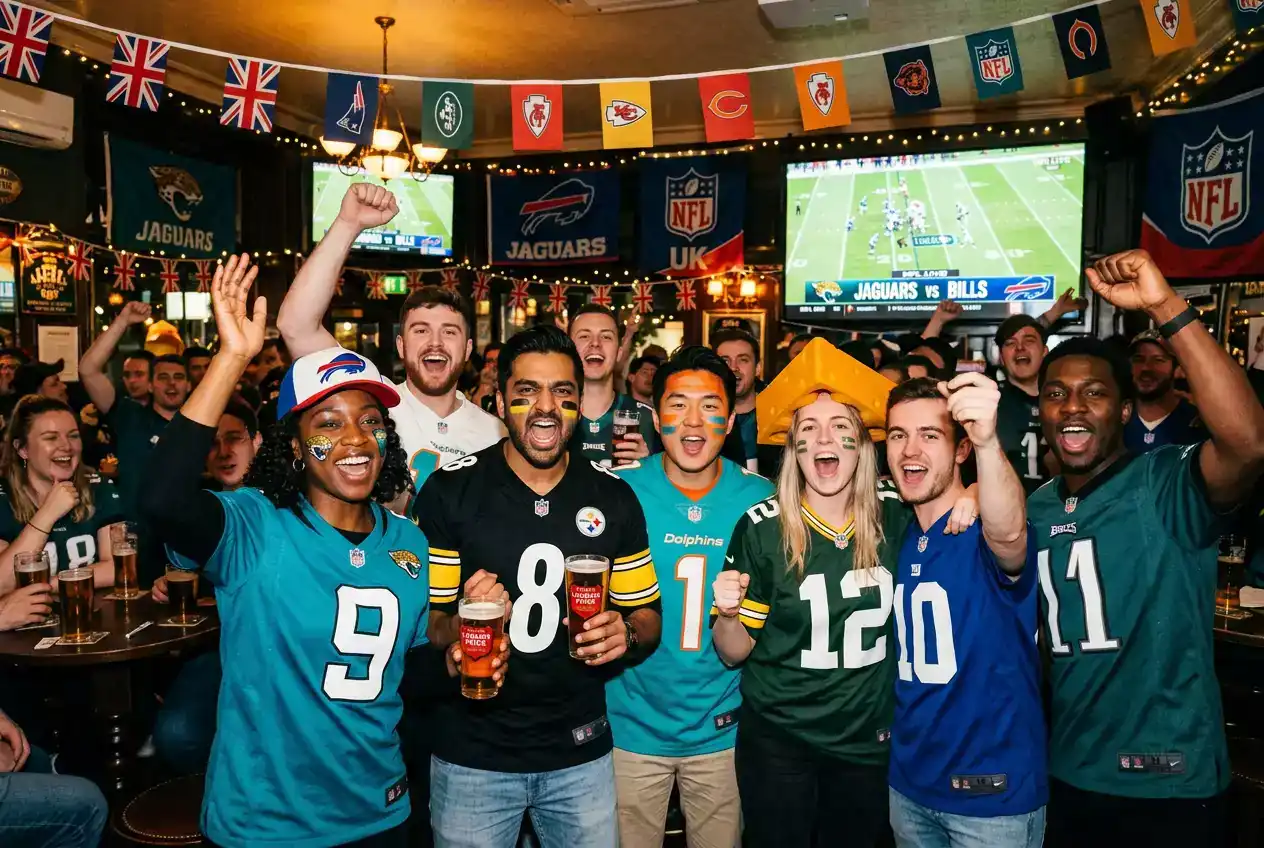
One underappreciated element of international games is crowd behaviour. At Wembley, the designated home team’s supporters are not always in the majority. UK fans tend to split their allegiance across several popular franchises – the Kansas City Chiefs command 9.5% of all team-related search traffic in Britain, making them the most popular NFL side in the country – so the “home” crowd advantage is diluted. Noise levels may be high, but they are not directionally hostile in the way a Lambeau Field or CenturyLink crowd would be.
This matters for in-play markets especially. Bookmakers typically shade live odds slightly toward the home side when the crowd generates momentum – a turnover, a big play – because noise affects communication at the line of scrimmage. In London, that shade is unreliable. The crowd cheers exciting plays regardless of which team produces them, creating a closer-to-neutral acoustical environment. Punters who recognise this can find value on designated away teams in live markets during London fixtures.
The atmosphere variable is harder to quantify in newer host cities. Paris and Melbourne have no track record of NFL attendance, so bookmakers will initially rely on proxies – European football atmosphere data, rugby crowd metrics – that may not translate cleanly. Early-mover punters who attend or closely study the first games in these venues will accumulate information that the broader market lacks, a rare form of legitimate edge in a sport that is otherwise drowning in publicly available data.
What UK Punters Should Watch For
If you are betting from the UK, the international expansion is, in a sense, your home advantage. You can attend London games, absorb pre-match atmosphere, gauge crowd energy in real time and relay that qualitative information into your in-play decisions faster than someone watching a grainy stream from a US time zone. That is a genuine informational edge, modest but real.
Beyond matchday attendance, keep an eye on scheduling announcements each spring. The moment the NFL releases its international fixture list, futures and season win total markets adjust – but not always efficiently. Teams with back-to-back international trips or international games sandwiched between divisional rivalries face compounded difficulty that may not be fully reflected in the odds for 24 to 48 hours.
Finally, monitor the regulatory landscape. As the NFL expands into new countries, local gambling regulators may impose rules that affect how odds are offered. France, for instance, has its own licensing regime through the ANJ (Autorité Nationale des Jeux), and promotional restrictions differ from those under the UKGC. If you plan to bet on a Paris-hosted game through a UK sportsbook, the odds will still be set globally, but understanding the regulatory context helps you anticipate where market inefficiencies might emerge.
The NFL’s push beyond American borders is not a gimmick. It is a decade-long strategic programme backed by billions in broadcast revenue and franchise valuations that now routinely exceed $5 billion. For UK punters, it means more games at convenient kick-off times, more data to analyse, more market variety – and, if you approach it with the right analytical framework, more opportunities to find value in a rapidly expanding global marketplace.
How many international NFL games are planned per season?
The NFL’s stated goal is 16 regular-season games outside the United States each year, which would mean every franchise plays one international fixture per season. The 2025 season featured seven international games, and the 2026 slate is expected to expand further with confirmed dates in London, Munich, Mexico City, Melbourne and Paris.
Do international NFL games affect betting odds differently than home games?
Yes. International fixtures remove or severely dilute traditional home-field advantage because neither team plays on its own turf. Travel fatigue, time-zone shifts, unfamiliar venues and neutral crowd dynamics all introduce variables that standard models may not fully capture, creating potential value for punters who analyse each host city’s specific conditions.
Prepared by the nfl Betting Ofds editorial staff.