NFL London Games Betting Odds: Wembley and Tottenham Matches
 Available in US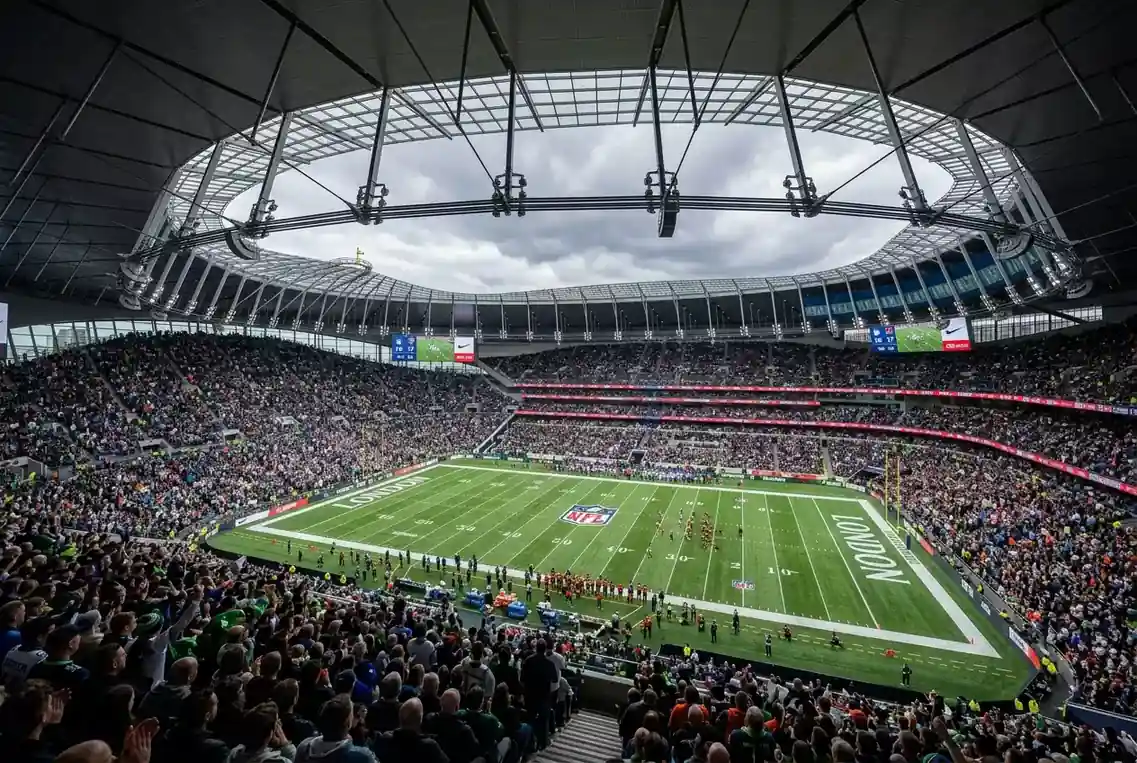
The first NFL game I attended in London was at Wembley in 2019. The atmosphere was electric, the hot dogs were overpriced, and the designated “home” team played like they had just stepped off a transatlantic red-eye – because they had. That day shifted how I think about London Games lines entirely. The venue is neutral, the travel is brutal, and the betting implications are real.
Since 2007, the UK has hosted over 39 regular-season NFL games, with a record crowd of 86,651 packing Wembley in 2024, according to Sky Sports and NFL.com data. In 2025, the league staged a record seven international fixtures, including three in London, drawing more than six million TV and online viewers for the London matches alone, per London Loves Business. These games are no longer a novelty. They are a fixture of the schedule – and a distinct betting market with its own patterns.
Cross-Atlantic Travel Impact on NFL Match Odds
Every bookmaker accounts for travel fatigue, but the question is whether they account for it enough.
An NFL team flying from the US West Coast to London crosses eight time zones. East Coast teams cross five. Both face jet lag, disrupted sleep schedules, and a practice week that is shorter or conducted in unfamiliar facilities. Some teams arrive the Wednesday before the game to acclimate; others fly in on Friday. That two-day difference in arrival time can affect preparation quality, and it occasionally shows up on the field.
In 2026, London is set to host three NFL games across Tottenham Hotspur Stadium and Wembley, with additional international fixtures planned for München, Mexico City, Melbourne, and Paris. The expanded calendar means more data points for bettors and more matchups where travel logistics factor into the line. I now track each team’s arrival date and training schedule in the week before a London game – details that mainstream odds-making models capture only in broad strokes.
The market typically adjusts spreads by one to two points for travel, depending on the distance and the teams involved. My own analysis suggests the adjustment is roughly fair for East Coast teams but slightly underpriced for West Coast teams, who face a more severe time-zone shift. If a West Coast side is listed as a narrow favourite in London, I look closely at whether the spread has fully absorbed the jet-lag factor – and more often than not, I find a half-point or more of potential value on the opponent.
Designated Home Teams and Crowd Bias
The NFL assigns one team as the “home” side for each London game, but that designation is largely cosmetic. There is no true home-field advantage when both teams are 3,500 miles from their own stadium.
The UK’s 14.3 million NFL fans, per official NFL research, bring genuine enthusiasm to London fixtures, but their allegiance is scattered across all 32 teams. Kansas City Chiefs merchandise dominates the stands one week, Jacksonville Jaguars jerseys fill them the next. The crowd energy is high but diffuse, which means the designated home team does not receive the same noise-driven advantage they would at their own venue. I have seen games where the “away” team received louder cheers than the “home” side, simply because their fanbase was better represented among London’s eclectic NFL community.
For betting purposes, I treat London Games as neutral-venue contests. Standard home-field advantage adjustments – typically worth around three points in the spread – should be discounted heavily, to perhaps half a point for the designated home team at most. Some bookmakers already price London lines this way, but not all, and the inconsistency creates opportunity.
Scoring and ATS Trends in London Games
Roger Goodell has been clear about the league’s ambitions: “We want to be there. We want to put roots in there. We’re really looking to build this over the long term.” That long-term commitment means London Games are not going away, and the sample size for trend analysis grows every year.
Across the 39-plus London fixtures since 2007, a few betting patterns have emerged. Totals in London Games have historically come in slightly below the posted number more often than above it. The likely explanation is conservative play-calling in a disorienting environment – teams unfamiliar with the venue, the surface, and the atmosphere tend to lean on their running games and play more cautiously in the first half. Second-half scoring picks up as teams settle in, but the slow starts often leave the total just short.
Against-the-spread performance is more mixed, but one pattern stands out: teams that have previously played in London perform better than teams making their London debut. Familiarity with the travel logistics, the venue, and the atmosphere appears to be a genuine edge. The Jacksonville Jaguars, who played multiple London games per season for several years, consistently covered spreads in those fixtures during their London residency. While that specific arrangement has evolved, the principle holds – prior London experience is a factor I weigh when handicapping these games.
For a broader look at how the NFL’s international ambitions are reshaping the betting landscape beyond London, I have covered the full scope in a piece on NFL international expansion and its market implications.
London Games sit in a unique analytical space. They are regular-season contests that count in the standings, but they play out in conditions that no domestic fixture replicates. Treat them accordingly: discount home-field advantage, respect the travel variable, lean slightly towards the under, and give extra weight to teams that have done this before. The crowd will be brilliant. The edges will be subtle. And the kickoff – blessedly – will be at a civilised hour.
Do NFL London Games favour the designated home team?
Not significantly. The designated home team in a London Game does not enjoy the same home-field advantage they would at their own stadium because neither team is playing in front of their regular crowd or in their familiar environment. The crowd support is typically split across fans of both teams and neutral NFL enthusiasts. For betting purposes, treating London Games as neutral-venue fixtures with minimal home-field adjustment is more accurate.
How does cross-Atlantic travel affect NFL odds?
Travel fatigue is reflected in the spread, typically as a one to two point adjustment depending on the originating time zone. West Coast teams face a more severe jet-lag impact than East Coast teams due to the larger time-zone shift. Some bettors find that the market underprices the travel effect for West Coast teams, creating potential value on their opponents. Arrival timing and practice schedules in the days before the game also influence readiness.
Created by the ”nfl Betting Ofds” editorial team.