NFL Preseason Betting Odds: High-Value Low-Information Markets
 Available in US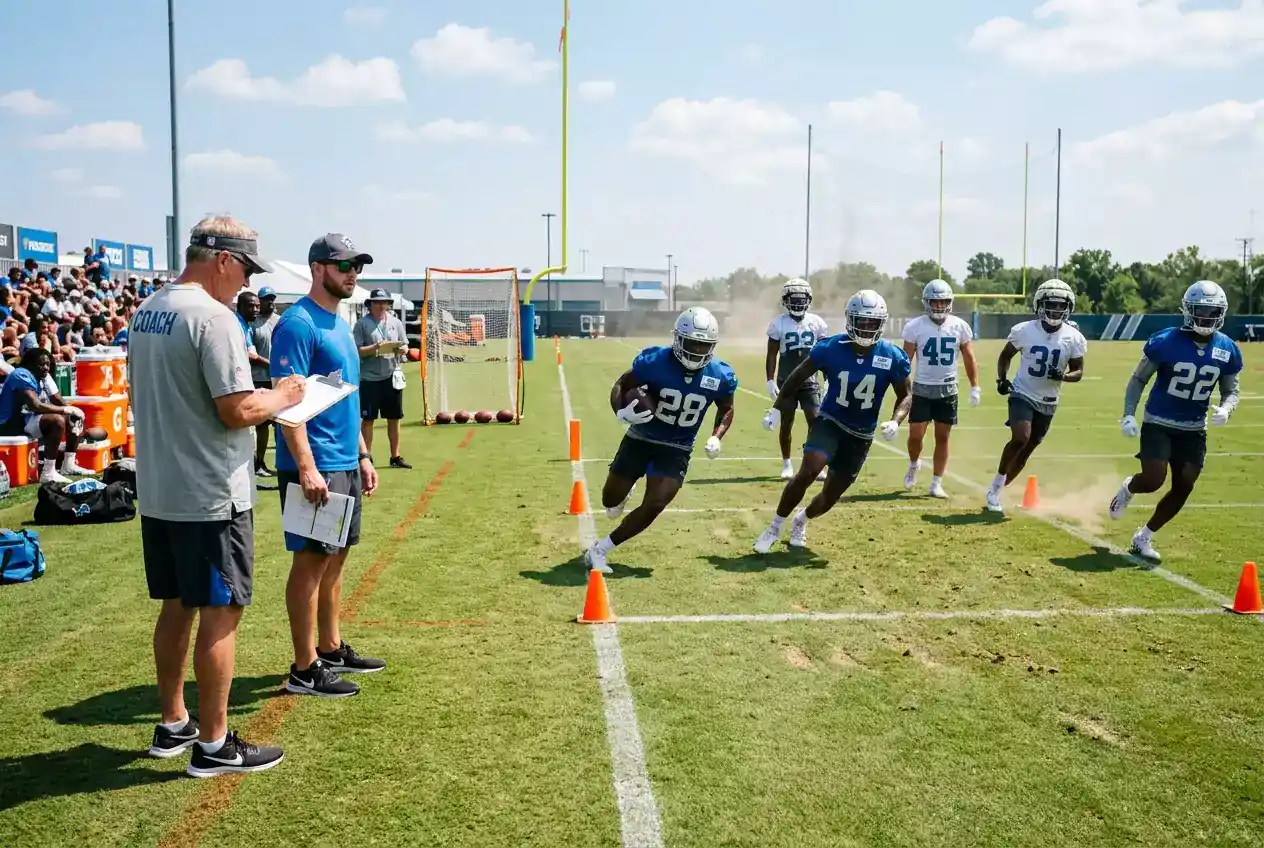
August is a strange month for NFL bettors. The games are on, the lines are posted, and the sportsbook makes it look like business as usual. But preseason football is a different sport from the regular season – the players, the schemes, and the stakes are all different, and the bettor who does not adjust is walking into a trap. I learned this the expensive way in my second year, backing a preseason favourite at -6.5 because their starters looked sharp in the first quarter. The starters played twelve snaps. The backups played forty-eight. The favourite lost by nine.
The NFL allowed up to six sportsbook advertisements per broadcast in the 2025 season, per NFL policy and RG.org data – a level of integration that extends into preseason broadcasts, ensuring that the betting market is visible even when the on-field product is at its least predictable.
NFL Preseason Roster Rotations and Betting Value Extraction
The single most important variable in preseason betting is who actually plays – and for how long.
NFL coaching staffs approach preseason games with one goal: evaluate the roster. Starters are not trying to win. They are running limited sets, testing new concepts, and getting light work to stay sharp without risking injury. In a typical preseason game, the starting quarterback plays one to two series – roughly six to twelve snaps. Starting offensive linemen and skill position players follow a similar pattern. By the second half, the roster on the field is entirely composed of players fighting for the final roster spots.
This means the outcome of the game is determined largely by depth. A team with strong second and third-string talent will outperform a team whose depth chart drops off sharply after the starters, regardless of how good either team’s first eleven is. Bookmakers know this and set preseason lines accordingly, but the market is thin and the information available to the public about backup players is limited, which creates genuine pricing inefficiency.
I focus my preseason analysis almost entirely on depth. How many rookies are competing for spots? How experienced is the backup quarterback? Is the coaching staff known for playing starters longer in the final preseason game, or do they shut everyone down early? These questions do not appear in standard game previews, but they drive preseason outcomes far more than any power rating or season projection.
Roster Turnover and Depth-Chart Uncertainty
Every off-season reshuffles the NFL’s deck, and the magnitude of that reshuffle varies wildly between teams. A franchise that lost five starters in free agency, drafted four rookies, and hired a new defensive coordinator is playing with a fundamentally different roster in August than the one that finished December. The market’s ability to price that uncertainty is limited, and the limitation is your edge.
Roger Goodell has set a target of sixteen international games per season, with every team playing abroad once. That ambition, combined with the existing eighteen-game regular season, increases the premium teams place on preseason health management – meaning more starters rest earlier, and roster battles are settled on even smaller sample sizes of live action.
Teams with high roster turnover tend to show more variance in preseason results. New players are learning new systems, communication is unpolished, and schematic execution is inconsistent. This variance works both ways – high-turnover teams can surprise or collapse – but the key insight for bettors is that the uncertainty itself should make you cautious about strong positions. Preseason is not the place for maximum-confidence wagers. It is the place for small edges exploited at small stakes.
I track roster turnover percentage – the proportion of snaps in the previous regular season that were played by players no longer on the team – as a baseline indicator of preseason disruption. Teams above 35% turnover are in rebuild mode regardless of what their off-season press conferences suggest, and I weight their preseason performance less heavily when building early-season models.
Exploiting Information Gaps Before Week 1
Preseason is the only period in the NFL calendar where the information asymmetry between casual bettors and dedicated analysts is at its widest. Casual bettors look at team names and last year’s records. Analysts look at training camp reports, depth chart competitions, and snap distribution data from the first preseason game. That gap creates the conditions for value – if you are willing to do the work.
Training camp reports from beat writers are the most underused resource in preseason analysis. These journalists attend practice daily and observe which players are excelling, which are struggling, and which position battles are genuinely contested. A beat writer’s note that the third-string quarterback has been consistently outperforming the second-string option is the kind of intelligence that moves preseason totals by two points in your model – even if the broader market has not noticed.
The first preseason game provides the most informative data point. Snap counts, drive outcomes, and offensive line performance from that game feed directly into my analysis of the second preseason game. I never bet the first preseason game – the information is too thin even for my comfort – but I use it as a data source for the rest of the preseason slate.
For UK punters, the practical challenge of preseason betting is timing. Preseason games often kick off at antisocial hours, and the market depth is shallower than regular-season fixtures. I place preseason bets early in the week when lines first post, because late-arriving information – a surprise starter announcement or an injury update – can move the number sharply in a thin market. Getting in first is more valuable during preseason than at any other point in the calendar.
Preseason is not where you build your bankroll for the year. It is where you sharpen your analytical tools, gather intelligence that will pay off in September, and occasionally find a line soft enough to justify a small position. The structured approach to managing stakes across the season – including the reduced exposure I recommend during these early weeks – is detailed in my guide on how the NFL calendar shapes betting markets.
Is NFL preseason betting worth it for casual punters?
Preseason betting carries higher variance and thinner market liquidity than regular-season wagering, which makes it less suitable for casual punters who prefer straightforward analysis. The games are decided largely by backup players whose talent is difficult to assess from public information. If you engage with preseason markets, keep stakes minimal and treat the exercise as information gathering rather than a profit strategy.
How much do NFL starters play in preseason games?
In a typical preseason game, starting quarterbacks play one to two series, roughly six to twelve snaps. Other offensive and defensive starters follow a similar pattern, with playing time decreasing as the preseason progresses. By the final preseason game, most starters play minimally or not at all, leaving the outcome to be determined almost entirely by depth players competing for roster spots.
Created by the ”nfl Betting Ofds” editorial team.