NFL Odds Conversion: Fractional, Decimal and American Prices
 Available in US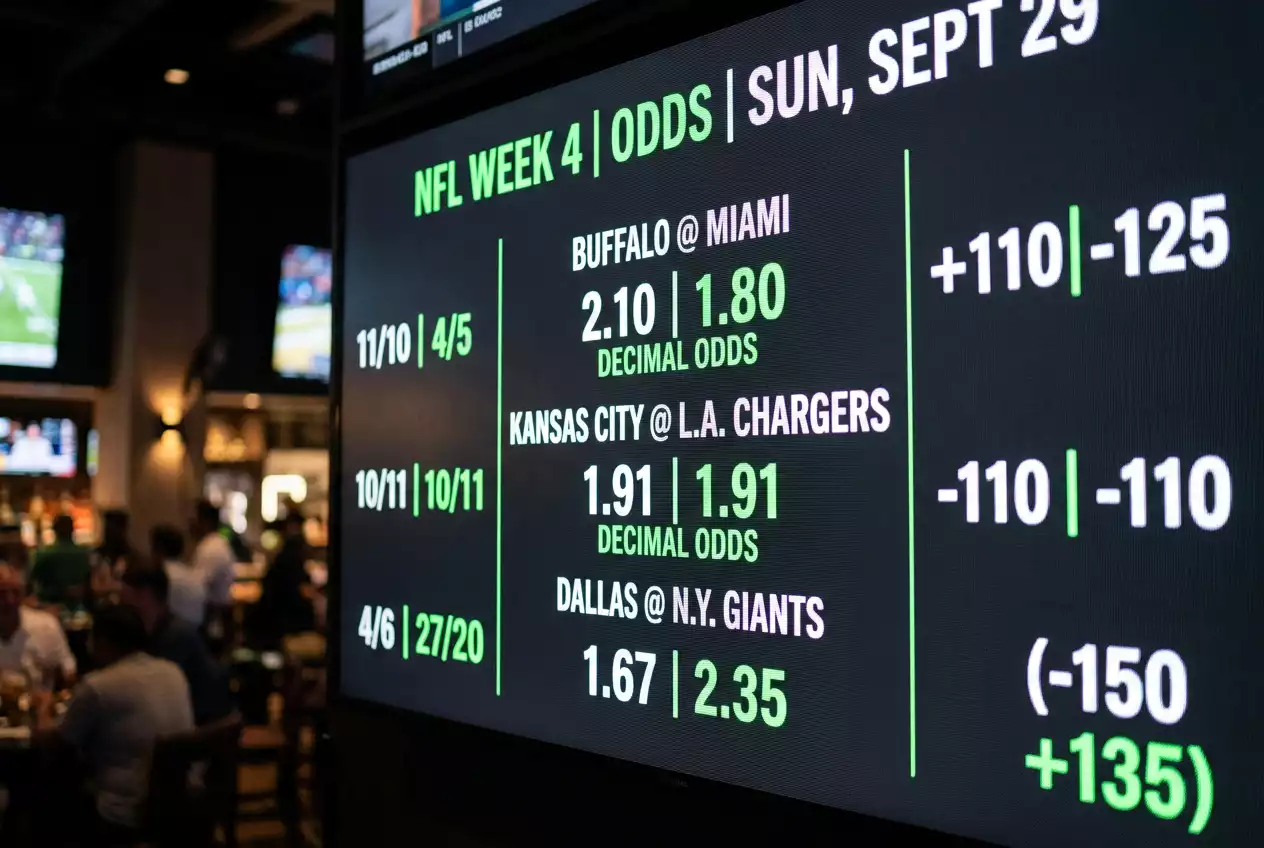
The first time I opened a US sportsbook feed alongside my UK account, I stared at “-110” for a solid thirty seconds. I knew the game, I knew the market, but the number might as well have been written in Morse code. That moment taught me something I now repeat to every punter who contacts me: odds are just prices in different currencies, and once you learn the exchange rate, the mystery evaporates.
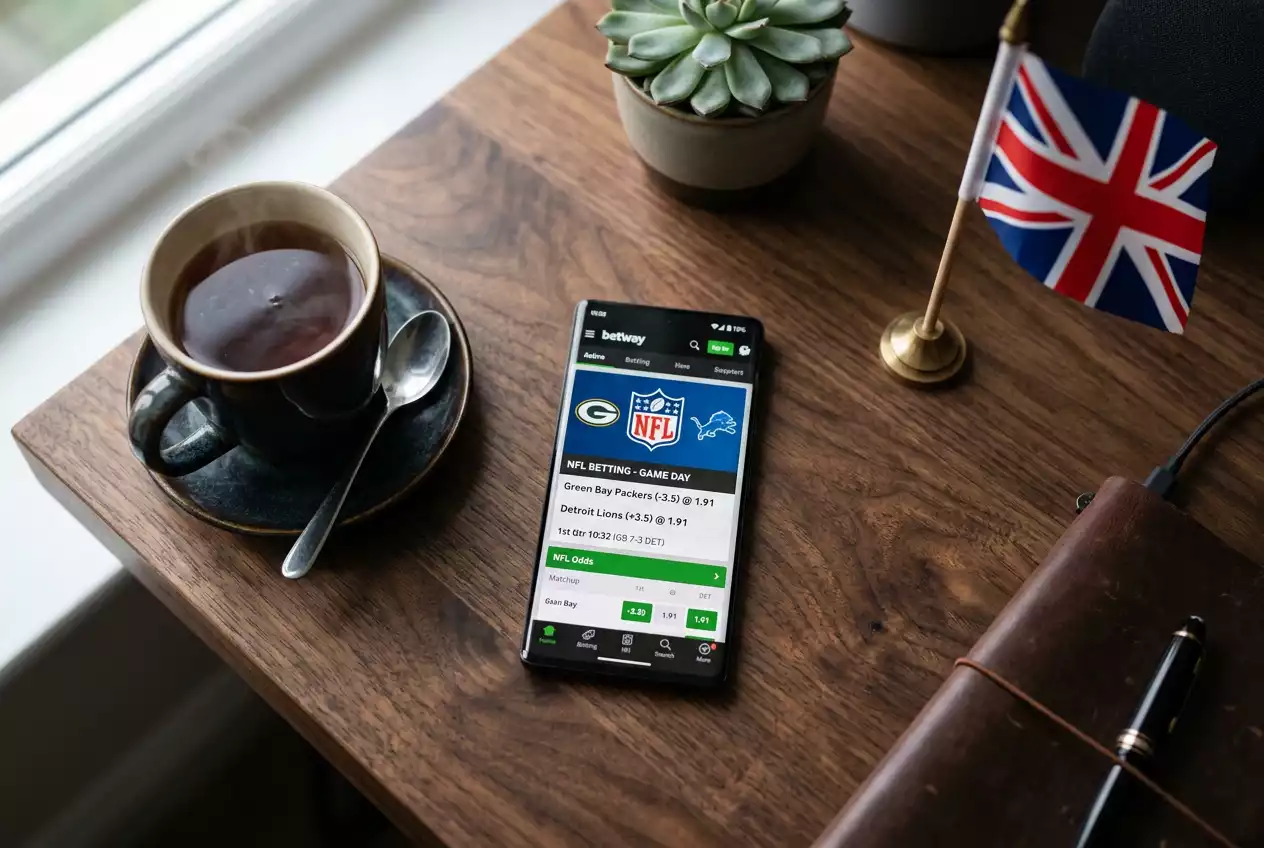
Three formats dominate NFL betting worldwide. American odds rule US sportsbooks, fractional odds are the UK default, and decimal odds sit somewhere in between – popular across continental Europe and increasingly offered as a toggle on British platforms. Each format expresses exactly the same thing: how much you win relative to your stake, and what probability the bookmaker assigns to the outcome. The numbers look wildly different, but the underlying price is identical.
With 13.5 million active online gambling accounts in the UK alone, per the UK Gambling Commission’s latest market overview, a growing slice of those users are betting on American football. If you are among them, this page will make sure the format never trips you up again.
NFL Betting Odds Formats and Payout Calculations
I keep a sticky note on my monitor that reads: “Format is presentation, not substance.” It saves me from overthinking every time a line pops up in a format I did not expect. Here is what each format actually tells you.
American odds revolve around the number 100. A negative figure – say -150 – tells you how much you must stake to win 100 units. A positive figure – say +130 – tells you how much you win from a 100-unit stake. The favourite carries the minus sign, the underdog carries the plus. Simple enough on paper, but the mental maths gets awkward when you try to compare -115 with 10/11 on the fly.
Fractional odds are what most UK punters grew up reading on the racecourse boards. The fraction 5/2 means you win five units for every two staked. The denominator is your outlay, the numerator is your profit. If a bookmaker prices the Kansas City Chiefs at 4/6 to cover the spread, you put up six to win four.
Decimal odds are the simplest to calculate but the least intuitive for anyone raised on fractions. A decimal price of 2.50 means your total return is 2.50 times your stake – including the stake itself. So a tenner at 2.50 returns twenty-five pounds, of which fifteen is profit. The lower the decimal, the shorter the price.
All three formats carry identical information. A line priced at -200 in American format equals 1/2 fractional and 1.50 decimal. No bookmaker offers better value in one format over another – it is purely a display preference.
Step-by-Step Conversion Formulas
Years ago I built a spreadsheet to handle these conversions automatically, but I still make myself do a few by hand each week. The mental exercise keeps me sharp when I am scanning lines on my phone at midnight and there is no spreadsheet in sight.
To convert negative American odds to decimal, divide 100 by the absolute value of the American number, then add 1. So -150 becomes (100 / 150) + 1 = 1.667. For positive American odds, divide the American number by 100 and add 1. +130 becomes (130 / 100) + 1 = 2.30.
Going from decimal to fractional requires one extra step. Subtract 1 from the decimal price to isolate the profit portion, then express it as a fraction and simplify. Decimal 2.50 becomes 2.50 – 1 = 1.50, which is 3/2 or “three to two.” Decimal 1.667 becomes 0.667, which simplifies to 2/3.
Converting fractional to American splits into two paths. If the fraction is less than 1 (meaning the numerator is smaller than the denominator, like 2/5), the outcome is a favourite: multiply the denominator by 100 and divide by the numerator, then slap a minus sign on it. 2/5 becomes -(5 x 100 / 2) = -250. If the fraction is 1 or greater (like 5/2), the outcome is an underdog: multiply the numerator by 100 and divide by the denominator. 5/2 becomes (5 x 100 / 2) = +250.
Implied probability – the percentage chance the odds suggest – deserves its own dedicated breakdown, and I have written one that covers implied probability and what it really reveals about a line. For now, the quick formula: divide 1 by the decimal odds and multiply by 100. A decimal price of 2.00 implies a 50% chance. A price of 1.50 implies 66.7%.
These formulas are mechanical, but they unlock a critical skill: cross-platform comparison. When one UK bookmaker shows 10/11 and another shows 1.91, you need to know instantly whether the second price is better. It is – by a hair. 10/11 converts to 1.909 decimal. That tiny difference adds up across hundreds of bets over a season.
Why UK Sportsbooks Default to Fractional
I once asked a product manager at a major UK operator why they still default to fractional odds in 2026. His answer was blunt: “Habit. Our core customers grew up with it, and changing the default creates support tickets.” That tracks. The UK gambling market generated GGY of 7.8 billion pounds in the most recent reporting year, per the Gambling Commission, and the infrastructure serving that revenue was built on fractional pricing decades before decimal or American formats gained traction here.
Horse racing – the bedrock of British betting culture – uses fractional odds almost exclusively. When football and other sports migrated online, they inherited the same display convention. The result is that a UK punter’s muscle memory is wired for fractions, even when decimals would make comparison faster and maths cleaner.
Most modern UK sportsbooks let you toggle between all three formats in your account settings. I run mine on decimal permanently because it makes cross-market calculations trivial, especially during NFL in-play sessions where speed matters. But I keep fractional fluency sharp for one practical reason: when a friend texts me a screenshot of their bet slip, it is always in fractions.
The format you choose has zero effect on value. What matters is understanding all three well enough to spot when two platforms are offering different prices on the same line. That is where the edge lives – not in the display, but in the gap between one bookmaker’s 10/11 and another’s -105.
What does -110 mean in NFL betting?
A price of -110 means you need to stake 110 units to win 100 units of profit. It is the standard American odds price for point spread and totals markets, equivalent to 10/11 in fractional format or 1.909 in decimal. The implied probability is roughly 52.4%, which means the bookmaker expects the outcome to be close to a coin flip but builds in a small margin.
How do I switch odds formats on UK betting sites?
Almost every UK-licensed sportsbook includes a format toggle in your account settings or directly on the bet slip page. Look for a dropdown labelled ‘Odds Format’ or ‘Odds Display’ and choose between fractional, decimal or American. The change applies site-wide and does not affect your payouts – only the way the price is displayed.
Written by the editors at nfl Betting Ofds.