NFL Implied Probability: Calculating True Betting Odds Value
 Available in US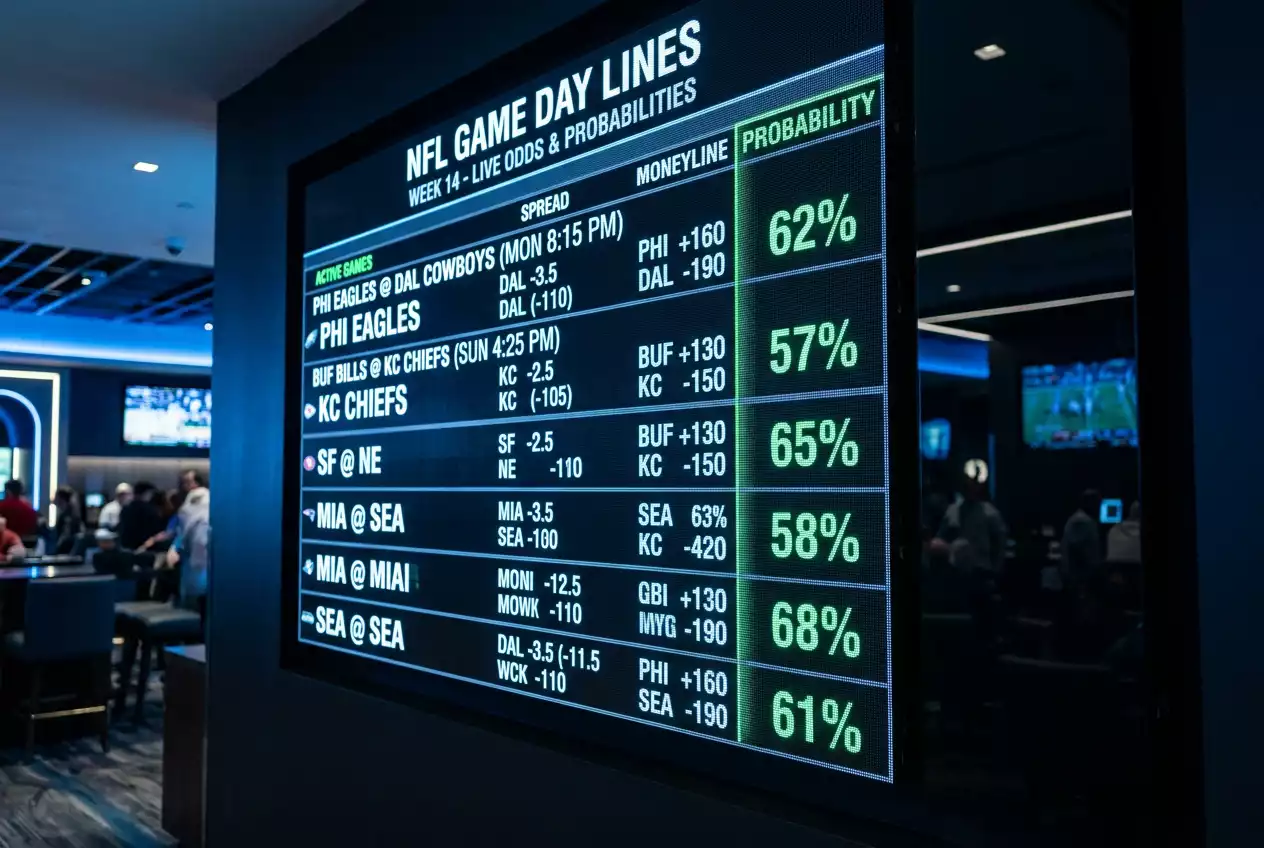
Every set of odds is a statement dressed up as a number. When a bookmaker prices the Buffalo Bills at 1.80 to beat the Miami Dolphins, that number is not arbitrary decoration – it encodes a specific probability estimate, minus the house edge. Learning to decode that estimate is the single most useful analytical skill I have picked up in eight years of NFL betting. It separates punters who understand what they are buying from those who just chase short prices.
Implied probability is the percentage chance that an odds price suggests for a given outcome. If the true probability of an event is higher than the implied probability, you have found value. If it is lower, the bookmaker has the edge. Every pricing decision in the global sports betting market – a market worth an estimated 112.26 billion dollars in 2025 according to Precedence Research – rests on this mechanism.
NFL Implied Probability Formula and Bookmaker Overround
A friend of mine who trades equities once told me that odds are just inverted probabilities with a markup. He was right, and the formula is mercifully simple.
For decimal odds, divide 1 by the decimal price and multiply by 100. An NFL line priced at 2.00 implies a 50% chance (1 / 2.00 = 0.50, times 100 = 50%). A price of 1.50 implies 66.7%. A price of 3.00 implies 33.3%. The lower the decimal price, the higher the implied probability – and the heavier the favourite.
For fractional odds, the formula adjusts slightly: divide the denominator by the sum of numerator and denominator, then multiply by 100. At 4/6, the implied probability is 6 / (4 + 6) = 60%. At 5/1, it is 1 / (5 + 1) = 16.7%.
For American odds, there are two paths. Negative American odds: divide the absolute value by the absolute value plus 100, then multiply by 100. So -150 becomes 150 / (150 + 100) = 60%. Positive American odds: divide 100 by the American number plus 100, then multiply by 100. +200 becomes 100 / (200 + 100) = 33.3%.
Run these calculations enough times and they become instinctive. I do them in my head during live games, checking whether the in-play price still makes sense as the scoreboard shifts.
Overround: The Bookmaker’s Built-In Edge
Here is where most beginners hit a wall. They calculate implied probabilities for both sides of an NFL game and find the percentages add up to something like 105% – not 100%. That surplus is not a rounding error. It is the overround, and it is how the bookmaker gets paid.
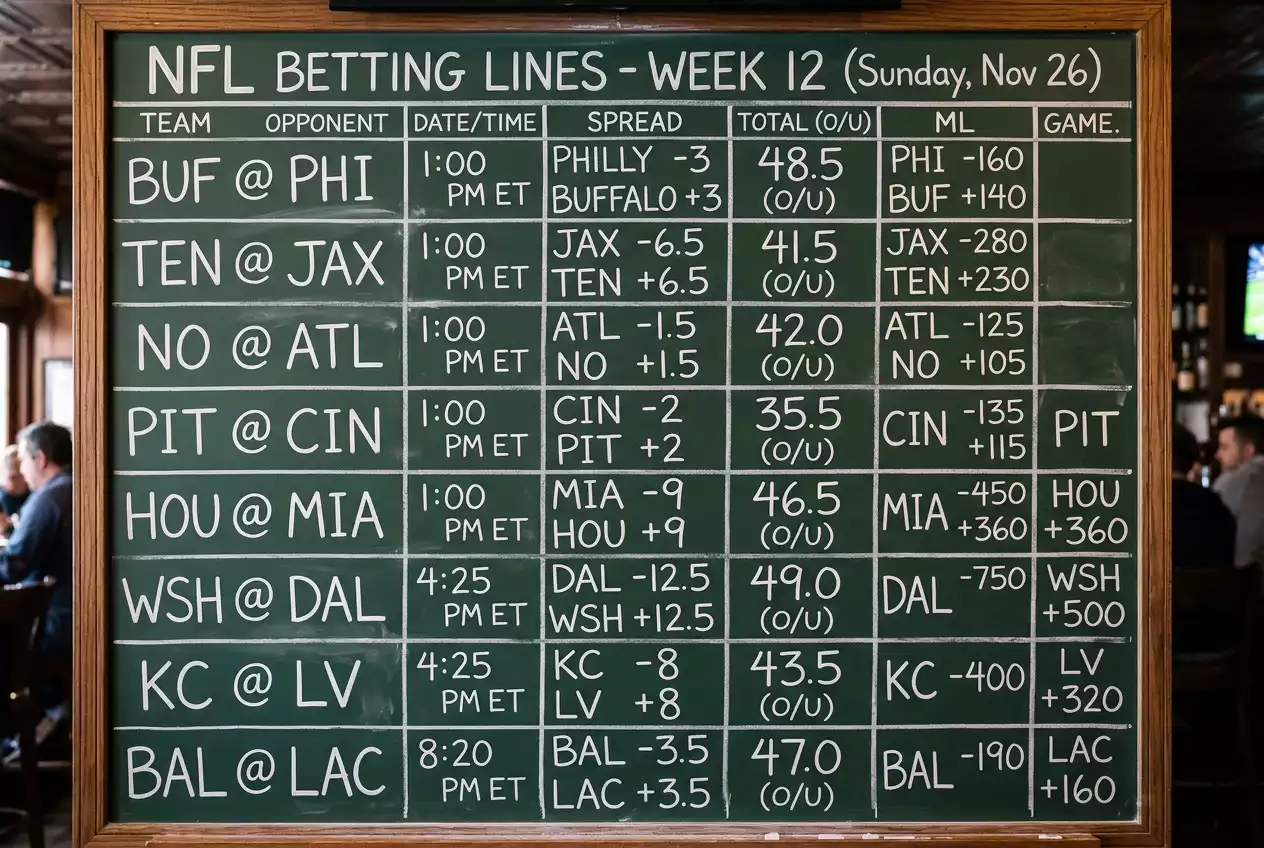
Take a typical NFL spread market priced at -110 on both sides. Each side implies 52.38% probability. Add them together: 104.76%. That extra 4.76 percentage points is the bookmaker’s margin, often called the vig or juice. The market behaves as if both outcomes are slightly more likely than they really are, and the difference flows into the operator’s pocket.
Overround varies by market and by bookmaker. Mainstream NFL spread and totals markets at major UK sportsbooks tend to carry an overround between 4% and 5%. Player prop markets run higher – sometimes 8% or more – because the bookmaker faces greater uncertainty and wants a wider cushion. Futures markets on Super Bowl winners or MVP awards can carry overrounds above 20%, which is one reason I treat those bets with extra caution.
FanDuel controls roughly 43% of US gross gaming revenue among sportsbook operators, and DraftKings holds about 25%, per industry reporting from 2025. The competition between these giants – and between their UK-licensed counterparts – occasionally compresses overrounds on marquee NFL lines, which benefits punters who shop across platforms.
Removing the Vig to Find True Probability
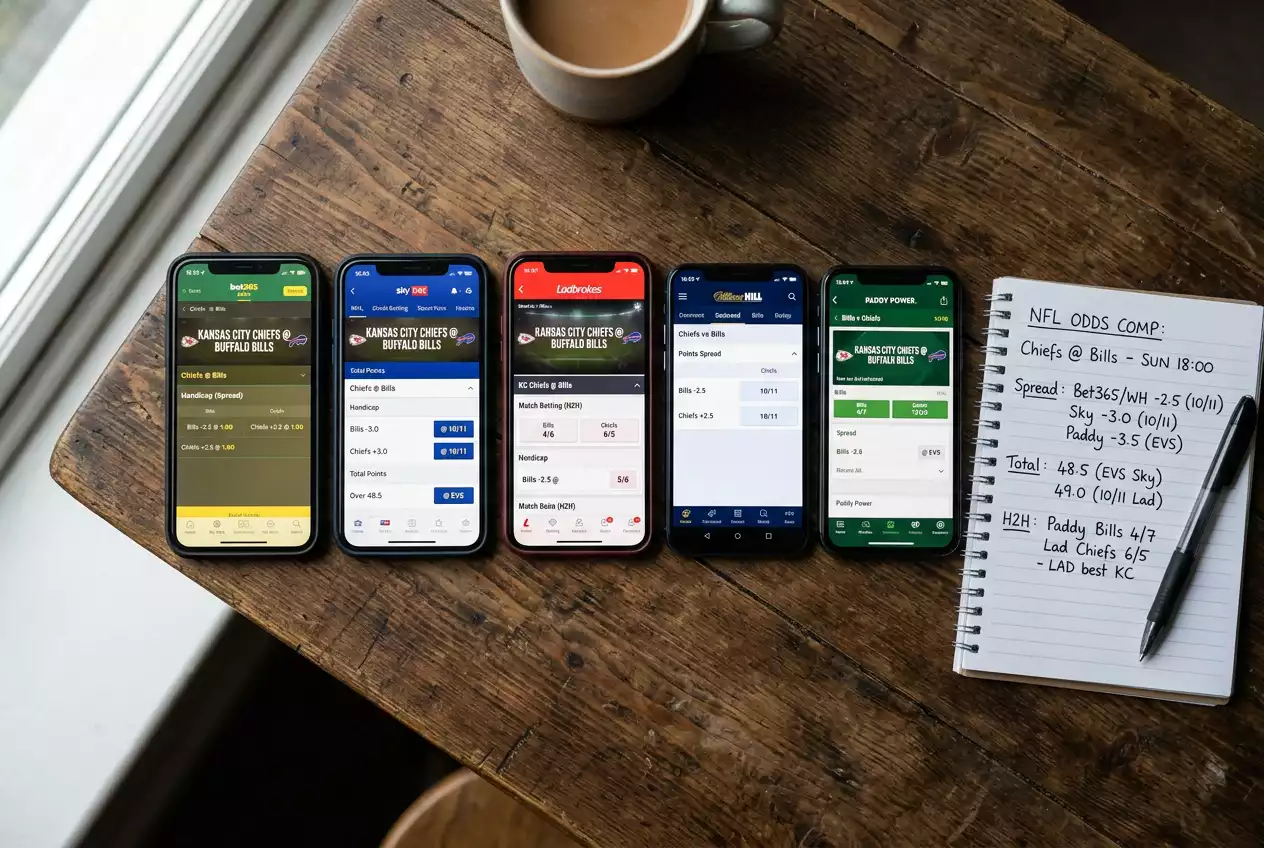
Last season I tracked every Week 1 spread line across four UK sportsbooks. The raw implied probabilities added up to anywhere from 104.2% to 106.1%. The variation told me exactly which platform was charging the least for the same event – and that is where I placed my bets.
To strip out the vig and estimate true probability, the simplest method is proportional distribution. Calculate the implied probability for each side, sum them, then divide each side’s implied probability by that sum. If Side A implies 55% and Side B implies 50%, the sum is 105%. True probability for Side A is 55 / 105 = 52.38%. True probability for Side B is 50 / 105 = 47.62%. Now the probabilities add up to 100%, and you have a cleaner picture of what the bookmaker actually believes.
This method is not perfect – more sophisticated approaches like the Shin model or power method adjust for favourite-longshot bias – but for a UK punter evaluating NFL lines on a Sunday morning, proportional distribution is fast, practical and good enough to separate a fair price from a poor one.
Where things get interesting is when you compare vig-free implied probabilities across multiple sportsbooks for the same market. If one platform’s vig-free probability for the favourite is 54% and another’s is 56%, the first platform is offering a better price on the favourite – even if the raw odds look similar. I run this comparison weekly on my primary NFL bets and it consistently surfaces one or two lines where the gap between platforms is large enough to matter.
The real payoff comes when you compare your own probability estimate to the vig-free implied probability. If you believe the Green Bay Packers have a 58% chance of covering a spread, and the vig-free implied probability is 52%, the gap suggests value. If your estimate is 49%, the line is against you. This framework – comparing personal estimates to bookmaker prices after removing the margin – is the foundation of systematic value betting in NFL markets.
Implied probability does not predict winners. It reveals the price you are paying and the belief embedded in that price. Every time you place a bet without calculating it, you are buying something without checking the label. In a market this large and this liquid, that is a habit worth breaking.
How do I calculate implied probability from fractional odds?
Divide the denominator by the sum of the numerator and denominator, then multiply by 100. For odds of 5/2, the calculation is 2 / (5 + 2) = 0.2857, multiplied by 100 gives 28.57%. This tells you the bookmaker’s odds imply a roughly 28.6% chance of the outcome occurring, before adjusting for the overround.
What is a fair overround in NFL betting?
For mainstream NFL markets like point spreads and totals, an overround between 4% and 5% is standard at major UK sportsbooks. Player prop markets typically carry higher margins of 6% to 10%, and futures markets can exceed 20%. Lower overround means better value for the punter, so comparing the total implied probability across platforms helps identify which bookmaker is offering the tightest margin on a given market.
Prepared by the nfl Betting Ofds editorial staff.