NFL Value Betting: Positive EV Odds and Market Prices
 Available in US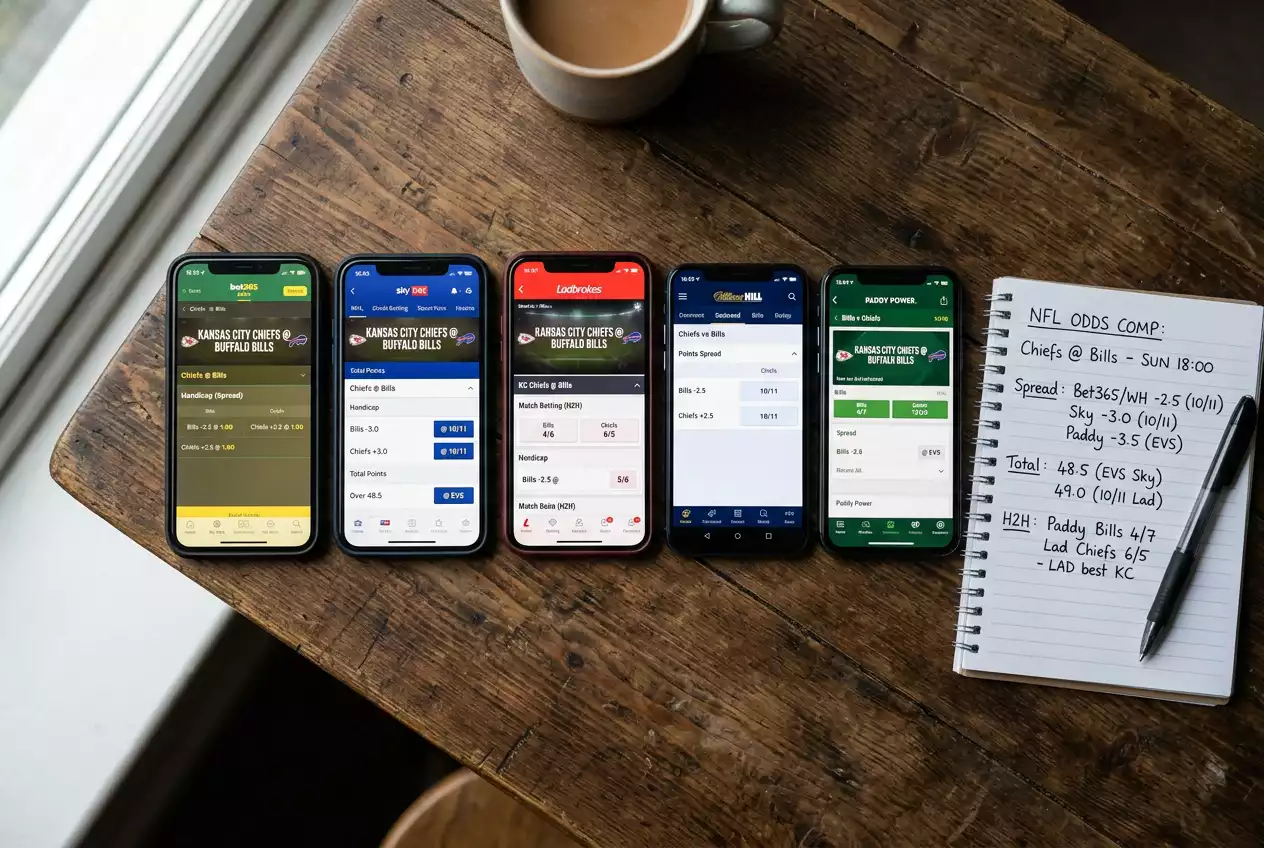
I placed a bet on the Jacksonville Jaguars two seasons ago that every metric told me was right – and it lost. I placed another the following week on a line that felt uncomfortable, but the numbers insisted it was value – and that one lost too. I kept going. By week eighteen, the bankroll was up eleven percent. That is what value betting feels like: individual results mean nothing, but the process prints money over time.
Value exists when the true probability of an outcome is higher than the probability implied by the odds. You are not predicting winners. You are identifying mispricings. US sports betting revenue grew 22.8% to 16.96 billion dollars in 2025, per the American Gaming Association, and that tidal wave of money creates both efficiency and opportunity. More liquidity means tighter lines on average – but also more spots where one bookmaker lags behind the rest.
Identifying Positive Expected Value (EV) in NFL Odds
A colleague once described value betting as “buying a pound coin for 90p.” The analogy sticks because it captures both the logic and the patience required.
Expected value is a mathematical concept: multiply each possible outcome by its probability, then sum the results. If you believe a team has a 55% chance of covering a spread priced at -110 (implied probability 52.4%), the expected value is positive. For every hundred pounds wagered at those odds, you expect to return roughly 104.55 over time. The edge is slim – about 2.6% – but compounded across hundreds of bets over an NFL season, it compounds into meaningful profit.
The challenge is obvious: you need an accurate probability estimate. If your 55% is actually 51%, your “value” bet is a slow leak. This is why I spend more time on probability modelling than on reading odds boards. The odds are public. The edge is in your assessment of the game itself.
NFL markets are among the most efficient in sports betting because they attract the largest handle of any league. Americans wagered a record 30 billion dollars on the NFL during the 2025 season through legal sportsbooks alone. That volume means bookmakers have enormous data sets and sharp bettors pushing lines toward equilibrium. Finding value is harder here than in a niche sport, but when you find it, you can bet with confidence that the line is genuinely off – not just an illusion of thin liquidity.
Closing Line Value as a Performance Benchmark
There is a metric I track more religiously than win-loss record, and it has transformed how I evaluate my own betting. Closing line value – CLV – measures whether the odds you took were better than the final line at kickoff.
If you bet a spread at -3 (-110) on Tuesday and the line closes at -3.5 (-110) by Sunday, you captured half a point of value. If you bet at -3 and the line closes at -2.5, the market moved against you – suggesting sharper money disagreed with your position. Over a full season, consistently beating the closing line is the strongest indicator of long-term profitability. Even if individual bets lose, positive CLV means you are taking prices better than the market’s final assessment.
I log every NFL bet with the time of placement and the closing line. At the end of each season, I calculate average CLV across all wagers. In my best year, average CLV was +1.8% – small on any single bet, but across four hundred wagers it was the difference between a losing season and a profitable one.
The practical takeaway is timing. Early-week lines in the NFL tend to be softer than closing lines because the market has not yet absorbed all information. Injury reports, weather updates, and public betting patterns all shift the number as the week progresses. Placing bets early is not always better – sometimes information that emerges later changes the picture entirely – but being aware of when you enter the market is essential to capturing or missing CLV.
Comparing Lines Across UK Sportsbooks
The simplest source of value in NFL betting does not require a model, a spreadsheet, or any mathematical sophistication at all. It requires a second account.
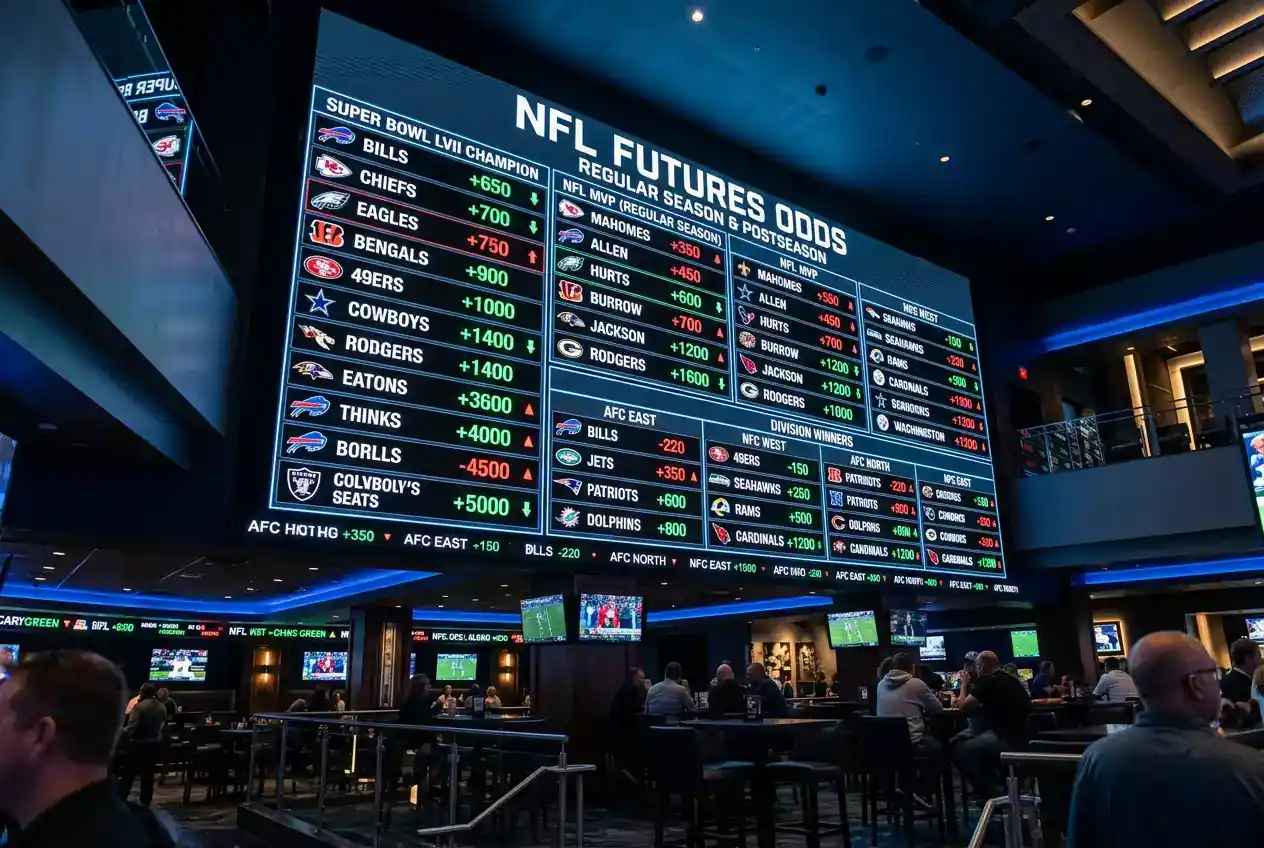
Line shopping – comparing the same market across multiple sportsbooks – is the closest thing to a guaranteed edge. If Sportsbook A offers the Chiefs at -3 (-110) and Sportsbook B offers the Chiefs at -3 (-105), the second price is better by five cents on the dollar. That difference might seem trivial, but the AGA’s Bill Miller has noted that regulated sports betting delivers value to consumers through competition and state-level regulation – and line variation between operators is one of the clearest expressions of that competition.
In the UK market, where multiple UKGC-licensed operators offer NFL odds, the variation is real and measurable. I regularly find half-point differences on spreads and 10-15 cent differences on totals across mainstream platforms. During the less liquid markets – preseason, Thursday night games, London fixtures – the gaps widen further.
Maintaining accounts at three or four sportsbooks is the minimum I recommend. Five or six is better. The time cost is negligible: a quick scan of lines takes ninety seconds. The payoff compounds invisibly but relentlessly. Over a season of, say, two hundred bets, consistently taking the best available price instead of the first price you see can shift your overall return by two to four percentage points. In a game where edges are thin, that is the difference between breaking even and finishing in profit.
Value betting is not glamorous. It does not involve gut feelings, hot tips, or dramatic last-second wins. It involves doing the maths, logging the results, and trusting the process when a string of losses tests your patience. If that sounds like work, it is. But it is the kind of work that pays – and among point spread markets especially, where the lines are tight and the margins are thin, it is the only sustainable approach I have found.
What is closing line value in NFL betting?
Closing line value measures whether the odds you accepted were better than the final odds available at kickoff. If you bet a spread at -3 and the line closes at -3.5, you captured positive CLV because the market moved in the direction of your bet after you placed it. Consistently beating the closing line over a full season is the most reliable indicator of long-term betting skill.
How many sportsbook accounts do I need for line shopping?
Three or four UKGC-licensed accounts is a practical minimum for effective line shopping on NFL markets. Five or six accounts gives broader coverage and increases your chances of finding the best available price on any given line. The time investment is minimal – a quick comparison takes under two minutes – but the cumulative benefit across a full season of bets can shift your overall return by several percentage points.
Published by the nfl Betting Ofds team.